DeFi, or decentralized finance, is a financial system that relies on peer-to-peer networking and self-executing smart contracts to eliminate the need for third-party intermediaries. One of the emerging assets within this new financial paradigm is synthetic assets.
As DeFi grows, synthetic assets are expected to appeal to a wider group of users and open up new investment opportunities. In this article, we will explore the concept of synthetic assets and their significance in the DeFi ecosystem.
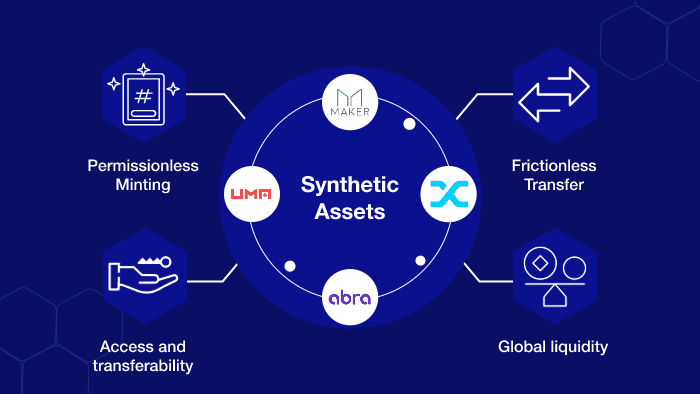
What are synthetic assets?
Synthetic assets, also known as crypto synths or tokenized derivatives, are digital assets created by linking a derivative’s value to a contract. They operate similarly to traditional financial derivatives, which are based on underlying assets such as stocks or bonds but are recorded on the blockchain and represented by a cryptocurrency token. Crypto synths are gaining popularity because they allow investors to speculate on the price movements of various tokens without actually owning them and offer increased security and traceability through their recording on a distributed ledger.
How do synthetic work?
To create a synthetic asset, a smart contract is written that specifies the terms of the asset, including the underlying asset it is based on, the amount of the asset that is being created, and any conditions that must be met for the asset to be activated. The smart contract is then deployed on a blockchain, where it can be accessed and managed by authorized parties.
Once a synthetic asset has been created, it can be bought and sold on a variety of platforms. The price of a synthetic asset is determined by the underlying asset it is based on, as well as supply and demand in the market.
Benefits of synthetic assets in DeFi
There are several advantages to using synthetic assets in DeFi (decentralized finance). One reason traders may prefer synthetic assets is for speculation, as they offer more liquidity and lower underlying costs than traditional asset exchanges. Additionally, synthetic assets do not require a counterparty for trades, as they can be burned and replaced with an equal value of a different synthetic asset, eliminating the need for order books. Synthetic assets are also decentralized, with few fees and no brokers or KYC systems, making them a cost-effective and decentralized option for trading.
Conclusion
As the market value of synthetic assets continues to grow, these assets are likely to become increasingly popular among investors seeking to diversify their portfolios and deploy a wide range of investment strategies on a diverse set of assets. This trend is expected to drive increased volume in crypto trading and attract traditional investors to the world of decentralized finance.

 Development Services