The logistics industry is undergoing a significant transformation, driven by the integration of artificial intelligence (AI) and machine learning (ML). AI consulting and development companies, like LeewayHertz, are at the forefront of this revolution, offering innovative solutions that optimize supply chain operations, enhance efficiency, and reduce costs.
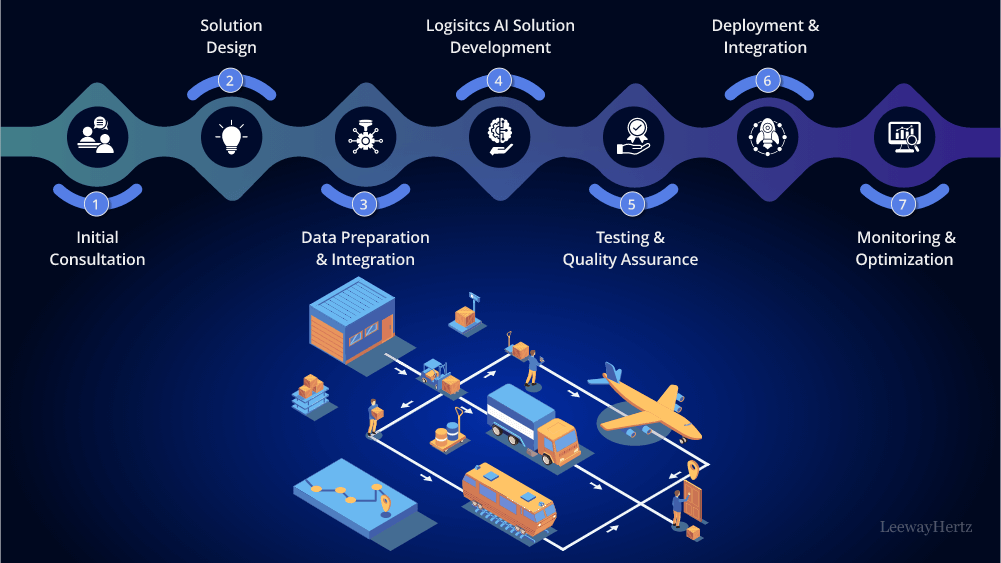
Key Services in AI-Powered Logistics
- Strategic Consulting AI consulting firms provide strategic advice to transform logistics operations. They leverage deep industry expertise and advanced technologies, including AI, blockchain, and IoT, to develop tailored solutions. These solutions aim to optimize supply chains, reduce costs, and enhance service delivery, ensuring that logistics operations are efficient, robust, and future-ready.
- PoC and MVP Development Proof of Concept (PoC) and Minimum Viable Product (MVP) development services are critical in the initial phases of product development. AI consulting companies help clients align their software initiatives with market demands, test the feasibility of their ideas, and integrate essential features based on real-world feedback. This approach ensures that logistics solutions are both innovative and practical, ready to meet market demands.
- Custom Logistics Software Development End-to-end software development services are crucial for creating custom logistics solutions. These services cover everything from conceptualization and MVP creation to the development of comprehensive logistics software. Solutions include warehouse management systems, logistics ERP, and inventory management software, all designed to optimize processes with enhanced functionality and usability.
- AI-Powered Solutions AI consulting firms specialize in developing and implementing customized AI-powered solutions tailored to specific business needs. These solutions optimize logistics operations for maximum efficiency and effectiveness. AI technologies enable real-time tracking, route optimization, order processing, and predictive analytics, redefining the standards of efficiency in logistics and supply chain operations.
- Software Modernization Modernizing legacy logistics software is essential for enhancing functionality, usability, and efficiency. AI consulting firms assist with migrating legacy systems to the cloud and integrating advanced technologies like AI and ML. This modernization ensures that logistics software infrastructure is future-proof, addressing evolving business needs through infrastructure upgrades, code refactoring, and data optimization.
- UI/UX Design User-centric design is crucial in developing intuitive interfaces for logistics software. Thorough usability testing and iterative improvements lead to highly functional and user-friendly designs. These designs significantly enhance the overall user experience within logistics operations, ensuring seamless interaction and optimized efficiency.
- Quality Assurance and Testing Rigorous quality assurance and testing methodologies guarantee the flawless performance of logistics software. Comprehensive assessments, including functional and performance testing, identify and resolve issues before deployment, ensuring optimal software performance and reliability.
Benefits of AI Integration in Logistics
- Enhanced Decision-Making AI systems analyze vast datasets to extract valuable insights that inform strategic decisions. This capability enables logistics companies to make data-driven decisions, optimizing operations and improving overall efficiency.
- Operational Efficiency Automation of repetitive tasks through AI streamlines processes, reduces human error, and frees up valuable time for staff to focus on high-value activities. This automation leads to significant improvements in operational efficiency and productivity .
- Cost Reduction AI technologies help in identifying inefficiencies and optimizing resource utilization, leading to substantial cost savings. For instance, AI-driven route optimization can reduce fuel consumption and improve delivery times, contributing to lower operational costs.
- Predictive Analytics Predictive analytics powered by AI can forecast demand, optimize inventory levels, and predict potential disruptions in the supply chain. This foresight allows logistics companies to proactively address issues, minimizing delays and ensuring smooth operations.
- Improved Customer Experience AI enables personalized customer experiences by providing real-time updates and responsive support. Enhanced customer service capabilities lead t.
Conclusion
AI consulting and development companies like LeewayHertz are revolutionizing the logistics industry by providing innovative, tailored solutions that enhance efficiency, reduce costs, and improve decision-making. By leveraging advanced technologies, these companies help logistics businesses stay competitive in a rapidly evolving market. Integrating AI into logistics operations not only drives operational excellence but also paves the way for future growth and innovation.

 Development Services