Blockchain Software Development Company

We create and build customized blockchain solutions with Hyperledger, EVM, Solidity, Cosmos or Substrate. In addition to creating business logic for running the blockchain, our experts are aware of how to build an NFT-based decentralized platform bridges, bridges and DEX tokens, metaverses, and DApps.

Blockchain Development Services

Blockchain Technology Consulting

Our method of blockchain consulting starts with the question of the reasons, the how as well as how the blockchain could help your business solution and provide transparency and trust in the entire system.

dApps Development

From design to planning and design, our blockchain experts develop enterprise-grade applications for decentralized blockchain to aid clients to speed up time until market, and maximize their ROI.

NFT marketplace development

We assist businesses in creating their protocol-specific, decentralized NFT marketplaces that manage NFT trading, bidding, and the sale of digital assets. To address interoperability issues we create cross-chain marketplaces that allow the creation of compatible multichain NFTs.

Metaverse development

With extensive experience in Blockchain, NFTs, and Crypto development tools, we provide Metaverse Development services for projects that cover NFT markets, social media, and 3D gaming.

Blockchain Supply Chain Development

We create, deploy, and manage blockchain-based solution for supply chains that give total transparency throughout the course of the supply chain’s path and assist in removing the complexities of communication and errors in data transfer.

Custom Blockchain App Development

With extensive experience in different blockchain-based platforms such as Tezos, Hyperledger, Polkadot, Tron, Stellar, and EOS We build strong and scalable custom blockchain software solutions to companies and startups.

Smart Contracts Development

Smart contract development at our company includes the creation and deployment of self-executing contracts that can be used on private and public blockchain networks. We are experts in the creation of intelligent contracts to support crowdfunding Blockchain solution for supply chains, NFT projects, and numerous applications.

Decentralized Exchange

Our team of blockchain developers creates secure and reliable exchange platforms that are decentralized on Android and iOS to allow instant transfer of digital currencies efficiently and securely.

Blockchain Wallet Development

Our blockchain developers create robust and feature-rich websites and mobile wallets that allow for the exchange of a variety of digital currencies and assets. They also integrate with features for cross-chain exchange of tokens.

Tokenization

Our team of blockchain developers will help you tokenize any asset you’d like that will ensure trust, transparency and effectiveness. Tokenization helps reduce volatility and bring more liquidity to a broad variety of assets.

Read More: https://www.leewayhertz.com/blockchain-development-company/

Migrate a Web2 Application to Web3

 It has been nearly three decades since the introduction of web. It all started with static text, images and then moved to web3. Web2 was the next step, which led to the modern internet. Now we are at the start of web3, which allows data to be seamlessly transferred across a distributed platform where ownership is distributed and control is distributed. It utilizes a technology stack that is based upon decentralized blockchains. Blockchains and tokens are the engine of the web’s economies and business models.

Web3 will become the marketplace of choice for businesses across all industries and is expected to be a major player by 2022. It’s built around edge computing, blockchain and cryptocurrencies as well as NFTs and virtual reality. Web3 development is gaining popularity as more companies try to integrate their products in this new space. Recent Google search trends indicate that web3 interest has increased by 33% in the past few months. This suggests that more businesses are interested in moving from web2 space to web3. Web2 to web3 migration represents a shift from an application-centric design to a user centric ethos of centralization.

What is web2?

Web2 is the second generation Web. Also known as the “read/write” web, it is also the second generation of World Wide Web. It allows for interactive functionality and compatibility by using the following features:

  • Content created by users
  • Transparency in data integrations
  • The web is not a network, but a platform
  • Software as a Service (SaaS), via API implementation technology

What is web3?

Web3 is the “read/write-own” mode on the internet. It uses blockchains, NFTs, and cryptocurrencies to empower users in the form ownership.

Web3 Features

Web3 is decentralized – This is in contrast to web2, which has internet controlled and owned by central entities. Instead, web3 allows ownership of the internet to be shared among its users and builders.

Permissionless – Everyone has equal access and no one is excluded from web3.

Native payments – Web3 uses cryptocurrency to send and receive money online, instead of relying on the legacy infrastructure of banks or payment processors.

Trustless – It relies on trusted third parties to perform its functions, but uses economic and incentive mechanisms.

Read More : https://www.leewayhertz.com/how-to-migrate-a-web2-application-to-web3/

Web3 Use Cases

Expanding the web and the constant improvement of the infrastructure of the web is crucial to make the web more accessible to users which will enable digital transformation. At first, Web1 offered us static websites and web pages that were text-based to give information to users . Web 1.0 was not focused on input by users. Thus, the web version is referred to for its “read-only” web.

In the second iteration of the internet web 2.0 was developed that is the current version that is part of the internet (internet infrastructure) that we are currently using. It is flexible, simple to use and integrates with different services and systems as well as software products. Web 2.0 includes a web version made up of web-based as well as social apps for media.

We are now getting ready for the next version of web3 – the decentralized web infrastructure that has led to a change in the online world. However, the idea behind web3 is undefined to many. Additionally, companies have begun to look into the actual applications of web3 to fully utilize its potential to transform business.

What is Web3?

Web3 is Web3 is the “next-iteration” of the internetthat is the evolution of the web 1 (HTML-based static websites) and web 2 (dynamic user-generated web). Web3 is still a developing concept, with many changes in progress on its future. People are frequently confused when they are trying to distinguish between web3 and 3.0. So, let’s look at the two concepts.

Web 3.0 The semantic web

Web 3.0 is semantic webs. The term “semantic” defines a study of a unique language and logic. Tim Berners, the world web’s inventor, invented the concept of the web 3.0 being the web that could read and processing data with no human intervention.

Web3-The decentralized web

The co-founder of Ethereum, Gavin Wood, coined the idea to end from the weight of a centralized web in which tech giants such as Facebook, Twitter and Google are able to gather and use information of users. Web3 can be powered with technology and concepts like self-sovereign identity, blockchain and a decentralized system for storage, changing the conventional notion of data ownership , and giving authority to users.

Architecture of Web3

Web3 is a serverless internet design, also known as a decentralized internet, which is designed to give access to data as well as management access rights for users instead of any central entity.

Read More: https://www.leewayhertz.com/web3-use-cases-and-applications/

White Label Crypto Exchange

Start your own exchange for crypto swaps by using our white label platform, SwapNow. It is bolstered by institutional-grade security as well as leading features Our white label crypto swap platform offers quick and efficient crypto swaps for endless exchanges.

The market is always growing and every time a company is looking to expand an additional token will be introduced onto the market. Each token is not only an opportunity to earn a new value, but rather an opportunity to invest. For certain investors, this could affect their financial outlook and understanding how to exchange effectively can make all the impact.

If you are confronted with a massive quantity of coins, beginner traders might not know how to do. They might have gotten certain coins from one exchange but they are looking for a way to make money from the other. This is the reason why a majority of users stick with the traditional method of conversion. They transform the cryptocurrency into fiat currency, and use it to purchase the currency they want. This is still an option to consider it will require an additional step and you may require transaction fees several times.

The practice of trading crypto is gaining popularity on major platforms and is becoming an important selling factor to smaller exchanges. It’s extremely quick due to its design therefore the competitive advantages depend on the variety and transaction fees.

What is the process of crypto swapping?

white label exchange for cryptocurrency is fully-functional platform that provides rapid time-to-market. It offers a simple and user-friendly interface for your customers to transfer crypto with a simple 1-2-3 process. Our white-label cryptocurrency exchange that we provide, designed to be used by a large number of people, is not an obstacle for users who have complicated graphs . It provides Web2 users a pleasant experience thanks to its UX.

The most important characteristics

  • Fast transaction
  • Unlimited swap
  • Cross chain swaps

The practice of trading crypto is gaining popularity across the top platforms and is now an important selling factor to smaller exchanges. It’s very fast because of its design consequently, the competitive features depend on variety and transaction fees.

Read More : https://www.leewayhertz.com/whitelabel-crypto-exchange/

:)

White Label Network Stats

Launch your own Blockchain network stats explorer with our white label network stats, an EVM-compatible, ready-to-deploy network explorer that displays network performance metrics for speed, efficiency, security, and node activities.

Launch Your Own Network Performance Monitor with Network Stats

Network Stats is a white label, low-time-to-market, go-to solution for launching your own blockchain network stats explorer. Network Stats Explorer drives transparency to your network’s performance by displaying real-time statistics about node activities and performance metrics like efficiency, security, and speed. It runs a blockchain crawler anchored to a node discovery protocol to query the nodes on your network, collect and aggregate data, and then display them through a node explorer user interface.

Key Features of Our White Label Network Stats

Node statistics

Provides real-time statistics like no. of active nodes, their country-wise geo-location, no. of nodes created in the last seven days, etc.

Performance metrics

Displays real-time network performance updates such as the total number of blocks created, avg block time, network uptime, etc.

Node activity table

Presents live updates for hundreds of network nodes, allows for pinning of preferred nodes, and facilitates the search for specific nodes by names.

Customizable

Customizable to include additional features necessary for improving a network’s transparency and credibility with its users.

Device Agnostic

Responsive UX design provides a great user experience across different browsers, OS and devices, including desktops, laptops, and smartphones.

EVM compatible

Compatible with all kinds of EVM-based blockchain protocols, including layer 1 and layer 2 chains. It can be architected for non-EVM blockchains also.

READ MORE: https://www.leewayhertz.com/whitelabel-network-stats/

Web3 Gaming

The entire story of Web3 Gaming,Web3 changed the way we play many sectors and has also revolutionized gaming. In a significant shift from traditional gaming platforms Web3-based games permit gamers to play games in new and innovative methods. Players can earn cash using NFTs and cryptocurrencies. This allows for a more open and inclusive approach to gaming, and puts the majority of the control in the hands of the player, rather than entrusting the power to a central player’s authority in a game.

In traditional gaming, content in games or digital assets can be purchased using fiat currency, or be used as rewards, game operators are still able to reserve copyrights to in-game content. In other words players do not have ownership of the digital assets in game. In the traditional game the players’ ownership is an authorization to interact with the elements of the game.

What exactly is Web3 gaming?

Web3 gaming is the process of gaming that is decentralized. The functions of a gaming environment or gaming platform, in particular that of the management of gaming assets, as well as the making decisions regarding every aspect of gaming are delegated to no central authority.

Web3 games are created by integrating blockchain technology into the gaming environment, which allows gamers to voice their opinions about when and how the game can change. Web3 gaming also sets the basis of pay-to-play for gamers, and also changes the pay-to-play component by providing the possibility of trading game tokens, and the chance to earn crypto when playing.

Web3 gaming is a fair and transparent virtual marketplaces in the game industry which allows players to have access to and full ownership of the digital assets in games. These assets are kept as gaming NFTs, and are distinct.

What are the main characteristics that are essential to Web3 gaming?

The Web Gaming model is value exchange gaming system that lets players purchase and sell in-game items and collectibles that are in the form of unique NFTs by using cryptocurrency. Web Gaming offers self-sovereignty and gaming decentralization, and is an open source. There are several fundamental aspects in Web3 gaming systems:

Interoperability and ownership

Web3 gaming is a self-sovereignty platform that allows players to own 100% of the game’s assets and collectibles in the form of digital NFTs. Traditional gaming lets players are able to own the game’s assets and collectibles but they forfeit all their possessions once they decide to change their gaming platform. Web3 gaming addresses this issue by offering the players with ownership of their assets and interoperability among different platforms. Players are able to own game properties on one platform, and then carry these assets over to the future gaming system.

Old game integration

Web3 gaming also has the aspect of integrating and updating older models of games into blockchain and metaverse platforms, making them decentralised in their nature. The process of gaming is individual and each player can play their own preferred game. Web3 lets you upgrade old and popular games by expanding the game to the metaverse where players can build their own avatars and exchange their preferred game items and collectibles.

Player-driven gaming

Web3 gaming can tailor the gaming environment based on the players’ preferences. There are many ways the way that Web3 gaming can benefit gamers. One of them is the play-to-earn feature which allows them to earn money through their game-related items Another is integration of old games that will take care of players’ desire to play their favourite games in the metaverse. Another advantage of playing with players is the fact that Web3 gaming is a self-sovereignty platform, which is also for the players’ good.

Negligible Downtime

Web3 gaming systems operate independently with minimal cost for maintenance and no interference by any authority. Block minting is a feature that Web3 gaming has and a high game data storage, Web3 gaming has negligible downtime and is extremely scalable.

Transparent gaming

Web3 games are a shared system that hosts games on the blockchain. This makes it impossible to hack. There is one factor of loss, gaming on blockchain is based on consensus voting to alter the game and is available to all players in the system. This is how Web3 gaming is able to guarantee an extremely high degree of transparency.

Read More: https://www.leewayhertz.com/what-is-web3-gaming/

Solana payment solution

Utilize your speed, efficiency, as well as the scalability of Solana by using our digital currency and payment solution designed for financial institutions to make seamless global payment and currency exchange.

Benefits of the Solana Solution for digital currencies and payments

Quick Transaction

Transact transactions immediately with the shortest payment time through an automated, reliable and decentralized payment systems.

No Risk of Counterparty

Reduces the risk of credit in international payments by allowing peer-to peer settlement of cross-border transfers that use different currencies.

High Scalability

With high liquidity, digital payment solutions that are built on Proof-of-History. The PoH consensus leads to high-quality, scalable transactions.

Cost Possibilities

Eliminates the third party to reduce the additional cost caused by intermediaries.

Transparency and traceability

With digital currency and payment solutions that are based on Proof-of-History that the transactions are traceable. This reduces the risk of security breaches or fraud, as well as mishandling of funds.

Transaction Efficiency

Cross-border cross-border transactions on a regular basis using different currencies through the use of the most efficient Solana Smart Contracts that limit lengthy reconciliation procedures by establishing previous contract rules.

Read More: https://www.leewayhertz.com/solana/paymnets-and-digital-currencies/

 Solana Smart Contract Development

What is Solana?

Solana is an open blockchain platform that is designed to alleviate the issues of scalability and congestion that are common in existing blockchains. The blockchain is designed with a primary goal of enhancing scalability, like a higher number of transactions per second (TPS) and faster confirmation times. It’s an open-source project that consists of cutting-edge technologies from Intel, Netscape, Google, Qualcomm to support Solana in ensuring high-performance standards. For more in-depth information about Solana check out our analysis exclusively about Solana.

What is the Architecture of Solana Smart Contract?

Solana’s smart-contract model is different from traditional EVM-enabled Blockchains. Traditional EVM-based contracts blend state and code in one contract that is implemented on the chain. However a smart contract running that runs on Solana remains in read-only, or stateless mode, and contains code only. After the smart contract has been activated, it can be access by accounts outside of the program, and these accounts can interact with the software to store information related to program interactions.

This is how the logic of separation between states (accounts) in addition to the logic of contracts (programs) is achieved and is a major distinction between traditional EVM-enabled as well as Solana smart contracts. Additionally accounts on Solana as well as others Blockchains (like Ethereum) are also very different. Accounts on Solana is a storage space for information (like account information) as opposed to Ethereum accounts, which are merely the reference for users wallets.

Read More: https://www.leewayhertz.com/build-solana-smart-contracts/

Metaverse Virtual Reality

 The last decade was the internet era. Now the upcoming decades are the metaverse era. The metaverse will allow for more interaction, collaboration, and immersive virtual worlds than the internet. Despite the many startups and technologies that have dabbled in this area, blockchain technology emerged as a technological platform that will support and help build a sustainable ecosystem for metaverse. Gaming NFT markets are an example of a budding metaverse. Leading gaming companies that are eager to start their Blockchain Metaverse projects decentralized are entering the metaverse space confidently, signaling that virtual reality and metaverse is the future.

What is Meta?

Metaverse does not refer to any particular technology. It is a general shift in the way that technology interacts with us. The technologies that make up the metaverse include virtual reality. This is a category that includes obstinate virtual realities that exist even when the user’s not active. It also includes amplified reality which combines the elements of the digital and physical worlds. Virtual reality is interoperable and allows you to move virtual objects such as clothes or cars between platforms. Most platforms have virtual identities and avatars that are tied to a single platform. You might still be able to use your metaverse to allow you to transfer your avatar from one platform into another. Let’s examine the core value the metaverse will look to attribute in order for us to better understand the metaverse.

  • Metaverse will be permanent, meaning it will never reset or pause but will continue on indefinitely.
  • It will be live and synchronous, as the pre-determined events in real life will also take place. However, the Metaverse will be an experience that everyone can enjoy in real-time.
  • Metaverse can be an economy with full functionality where people and businesses can sell, buy, own, invest, and get widely recognized for their work.
  • The metaverse experience can be accessed from both digital and real worlds. It will include private and public networks, open and closed platforms, and digital and physical worlds.
  • Digital assets and digital content can be interoperable in unprecedented ways
  • The metaverse will include content and experiences created by a variety of contributors. These contributors can be independent individuals or informally organized groups.

Read More : https://www.leewayhertz.com/how-to-build-the-metaverse-virtual-world/

Ticket NFT

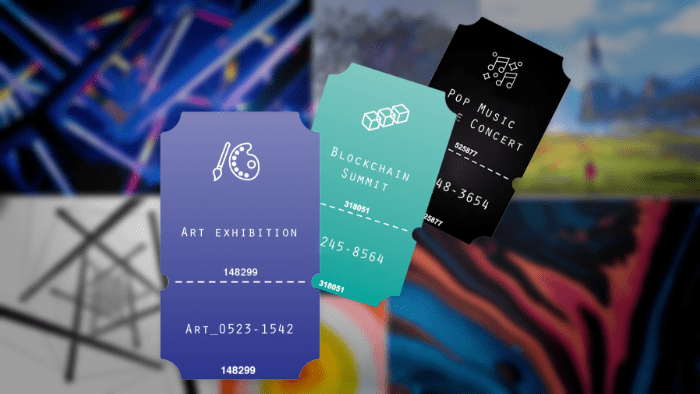
 As NFTs gain popularity and increasing in popularity, the NFT market has reached the level that was $24.9 billion, as per the data provided by DappRadar. As NFTs drive transformations across a variety of industries, the market for events is the first to use NFTs to link both physical and electronic ticketing.Before the introduction of digital ticketing, individuals were collecting tickets from the past. Every ticket had a unique design, bringing back memories, be it an opera performance in Vienna or an event at the World Cup in England, or music festivals in California. With the advent of digitization, we have simplified tickets, technology for ticketing has made it more efficient and trustworthy for all. But, using a basic QR code with no story that explains it is dull. Digital tickets are not something that people would like to keep, and to look back on.

The ticketing system currently does not allow people to reflect on memorable moments from previous occasions. Thus, NFTs have come in with the aim of making ticketing more useful and easier to store to keep as memories.

A ticket printed on paper could be lost, damaged because of water, or damaged. In addition, organizers do not receive enough security from tickets made of paper. They can easily be counterfeited. QR codes can solve this issue for organizers, but are not as effective for the guests buying tickets.

What are the issues that the traditional ticketing system faces?

Tickets with black marketing

Fraud has been a major issue in the ticketing industry and has forced customers to pay more for tickets and posing security risks for the event’s organizers. By utilizing technology in a way that isn’t ticketing bots create chaos, and allow those online to buy tickets in bulk and then sell tickets to secondary markets for very high prices.

Lack of exchange protocol

It is difficult to trace the customers’ movements or exchange information outside the limits of a supplier as the absence of an exchange protocols allows fraud on markets that sell on the second. If a ticket sells in the secondary market it is no longer the ownership of the buyer with the details that the organizer have. Thus, the event’s organizers don’t know who attends their event. Since tickets are issued in a manner that doesn’t allow exchanges in the secondary market, there is no way to alter the ticket holders name, nor to determine how often the tickets are exchanged.

Customer Trust

One of the main questions for visitors is whether they’ve purchased a genuine ticket or fake. Sometimes, guests purchase fake tickets from websites that pose as legitimate ticketing agencies and can cause financial loss and dissatisfaction.

Read More: https://www.leewayhertz.com/how-nft-ticketing-works/