The Transformative Role of Logistics AI Consulting and Development

The logistics industry is undergoing a significant transformation, driven by the integration of artificial intelligence (AI) and machine learning (ML). AI consulting and development companies, like LeewayHertz, are at the forefront of this revolution, offering innovative solutions that optimize supply chain operations, enhance efficiency, and reduce costs.
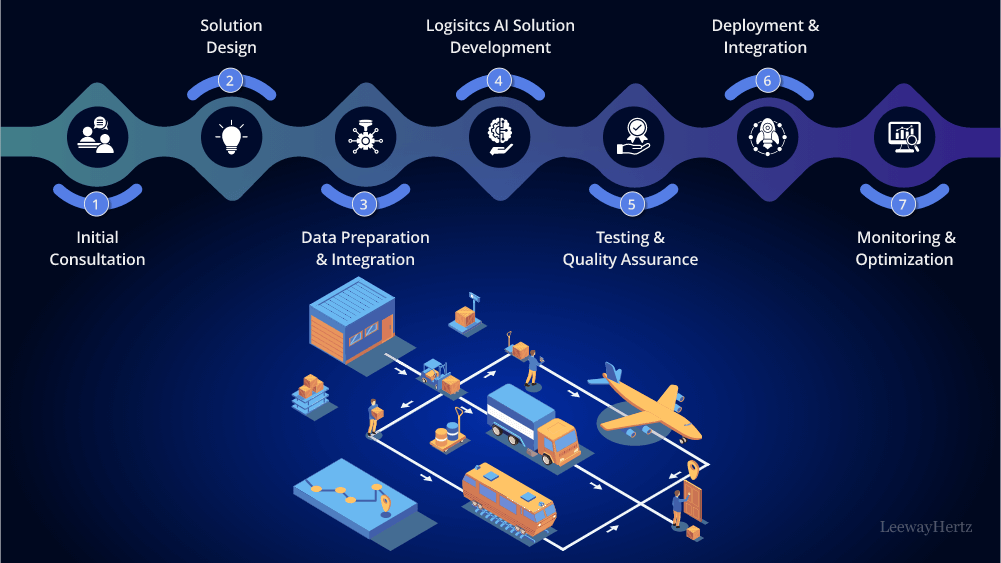
Key Services in AI-Powered Logistics

  1. Strategic Consulting AI consulting firms provide strategic advice to transform logistics operations. They leverage deep industry expertise and advanced technologies, including AI, blockchain, and IoT, to develop tailored solutions. These solutions aim to optimize supply chains, reduce costs, and enhance service delivery, ensuring that logistics operations are efficient, robust, and future-ready​.
  2. PoC and MVP Development Proof of Concept (PoC) and Minimum Viable Product (MVP) development services are critical in the initial phases of product development. AI consulting companies help clients align their software initiatives with market demands, test the feasibility of their ideas, and integrate essential features based on real-world feedback. This approach ensures that logistics solutions are both innovative and practical, ready to meet market demands​.
  3. Custom Logistics Software Development End-to-end software development services are crucial for creating custom logistics solutions. These services cover everything from conceptualization and MVP creation to the development of comprehensive logistics software. Solutions include warehouse management systems, logistics ERP, and inventory management software, all designed to optimize processes with enhanced functionality and usability​.
  4. AI-Powered Solutions AI consulting firms specialize in developing and implementing customized AI-powered solutions tailored to specific business needs. These solutions optimize logistics operations for maximum efficiency and effectiveness. AI technologies enable real-time tracking, route optimization, order processing, and predictive analytics, redefining the standards of efficiency in logistics and supply chain operations​.
  5. Software Modernization Modernizing legacy logistics software is essential for enhancing functionality, usability, and efficiency. AI consulting firms assist with migrating legacy systems to the cloud and integrating advanced technologies like AI and ML. This modernization ensures that logistics software infrastructure is future-proof, addressing evolving business needs through infrastructure upgrades, code refactoring, and data optimization​.
  6. UI/UX Design User-centric design is crucial in developing intuitive interfaces for logistics software. Thorough usability testing and iterative improvements lead to highly functional and user-friendly designs. These designs significantly enhance the overall user experience within logistics operations, ensuring seamless interaction and optimized efficiency​.
  7. Quality Assurance and Testing Rigorous quality assurance and testing methodologies guarantee the flawless performance of logistics software. Comprehensive assessments, including functional and performance testing, identify and resolve issues before deployment, ensuring optimal software performance and reliability​.

Benefits of AI Integration in Logistics

  1. Enhanced Decision-Making AI systems analyze vast datasets to extract valuable insights that inform strategic decisions. This capability enables logistics companies to make data-driven decisions, optimizing operations and improving overall efficiency​.
  2. Operational Efficiency Automation of repetitive tasks through AI streamlines processes, reduces human error, and frees up valuable time for staff to focus on high-value activities. This automation leads to significant improvements in operational efficiency and productivity​ .
  3. Cost Reduction AI technologies help in identifying inefficiencies and optimizing resource utilization, leading to substantial cost savings. For instance, AI-driven route optimization can reduce fuel consumption and improve delivery times, contributing to lower operational costs​.
  4. Predictive Analytics Predictive analytics powered by AI can forecast demand, optimize inventory levels, and predict potential disruptions in the supply chain. This foresight allows logistics companies to proactively address issues, minimizing delays and ensuring smooth operations​.
  5. Improved Customer Experience AI enables personalized customer experiences by providing real-time updates and responsive support. Enhanced customer service capabilities lead t.

Conclusion

AI consulting and development companies like LeewayHertz are revolutionizing the logistics industry by providing innovative, tailored solutions that enhance efficiency, reduce costs, and improve decision-making. By leveraging advanced technologies, these companies help logistics businesses stay competitive in a rapidly evolving market. Integrating AI into logistics operations not only drives operational excellence but also paves the way for future growth and innovation.
AI Chatbot Development Services

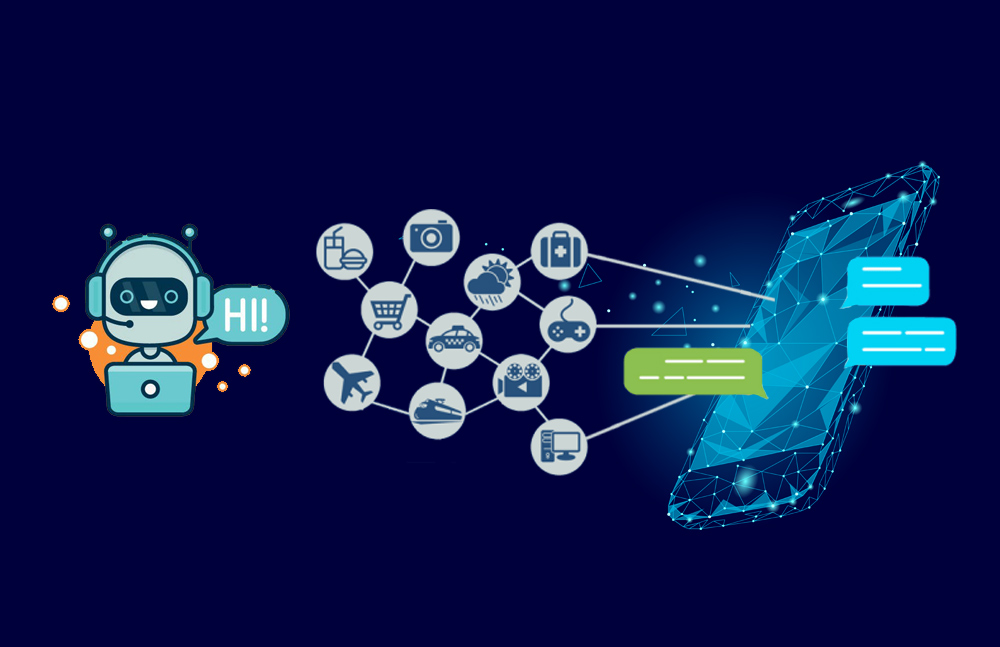
In this rapidly evolving digital era, businesses are continuously seeking innovative ways to enhance customer experience and streamline their operations. One of the game-changing technologies that have emerged in recent years is AI chatbot development. Leveraging artificial intelligence and natural language processing, AI chatbots have revolutionized the way companies interact with their customers, leading to increased efficiency, improved customer satisfaction, and greater overall success. In this blog, we explore the role of an AI chatbot development company in transforming businesses and unleashing the true potential of AI chatbot development services.

Understanding AI Chatbot Development

AI chatbot development is a process that involves creating intelligent virtual agents capable of simulating human-like conversations with users. These chatbots are powered by advanced AI algorithms, enabling them to understand user intent, analyze language patterns, and deliver contextually relevant responses. The technology behind AI chatbots allows them to learn from interactions and continuously improve their performance over time, providing a seamless and personalized experience to users.

The Need for AI Chatbot Development Services

With the growing demand for instant support and round-the-clock availability, businesses are turning to AI chatbots to meet these expectations. AI chatbot development services enable companies to enhance customer engagement, automate repetitive tasks, and provide real-time assistance, all while reducing operational costs. These chatbots can be deployed across various platforms, including websites, mobile applications, and social media, to reach a wider audience and establish a stronger brand presence.

Benefits of Partnering with an AI Chatbot Development Company

  1. Expertise in AI Technology: An AI chatbot development company possesses a team of skilled developers, data scientists, and AI experts who are well-versed in the latest advancements in AI technology. Their in-depth knowledge ensures the creation of robust and intelligent chatbots that cater to specific business needs.
  2. Customized Solutions: Every business is unique, and their chatbot requirements may vary. AI chatbot development companies offer tailored solutions that align with the organization’s goals and industry niche. From simple FAQ chatbots to sophisticated virtual assistants, these companies can create a wide range of chatbot applications.
  3. Seamless Integration: Integrating AI chatbots into existing systems can be challenging. A professional AI chatbot development company possesses the technical know-how to seamlessly integrate chatbots into various platforms, ensuring a smooth user experience and effective implementation.
  4. Natural Language Processing (NLP) Capabilities: Advanced NLP is the cornerstone of efficient AI chatbots. Leveraging NLP, these bots can understand user queries, context, and intent accurately, leading to more meaningful interactions and better customer satisfaction.
  5. Continuous Improvement: An AI chatbot development company doesn’t stop at deployment. They continuously monitor chatbot performance, gather user feedback, and refine algorithms to optimize the bot’s responses. This commitment to improvement guarantees a chatbot that evolves with the business and user needs.

The Transformative Power of AI Chatbot Development

  1. Enhanced Customer Experience: AI chatbots provide instant and accurate responses to customer queries, offering a seamless customer experience without any wait times. This leads to higher customer satisfaction and loyalty, as users feel valued and well-supported.
  2. Increased Efficiency: By automating repetitive tasks, AI chatbots free up human resources to focus on more complex and strategic activities. This efficiency translates to reduced operational costs and improved productivity for businesses.
  3. 24/7 Availability: AI chatbots operate round the clock, catering to customer needs regardless of time zones or holidays. This constant availability ensures that businesses never miss an opportunity to engage with their audience.
  4. Data Insights: AI chatbots gather valuable data from user interactions, providing businesses with insights into customer preferences, pain points, and behavior. These data-driven insights empower organizations to make informed decisions and refine their marketing strategies.

Conclusion

In conclusion, AI chatbot development services have emerged as a game-changing solution for businesses worldwide. The expertise, customized solutions, seamless integration, and continuous improvement offered by AI chatbot development companies are crucial in harnessing the true potential of AI chatbot technology. By partnering with such companies, businesses can enhance customer experience, increase efficiency, and gain a competitive edge in today’s fast-paced digital landscape. Embracing AI chatbots is not just an option; it’s a strategic imperative for companies looking to thrive in the age of automation and smart interactions.

Unleashing the Power of Tomorrow: A Deep Dive into Generative AI Consulting

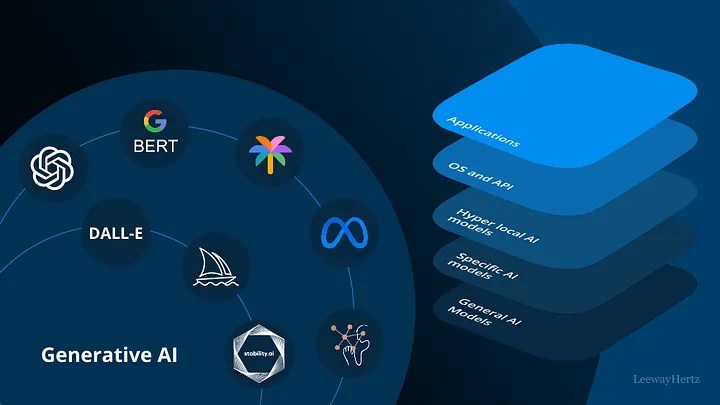
In the ever-evolving landscape of technology, Generative AI Consulting has emerged as a transformative force, reshaping industries and revolutionizing the way businesses operate. This cutting-edge field harnesses the power of Generative Artificial Intelligence (AI) to provide innovative solutions, drive efficiency, and unlock unprecedented possibilities. As businesses strive to stay ahead in the digital era, partnering with a Generative AI consulting company becomes not just an option but a strategic imperative.

Understanding Generative AI Consulting

Generative AI Consulting involves the use of advanced machine learning models to create data, content, or even entire systems autonomously. Unlike traditional AI, which relies on predefined rules and structured data, generative AI has the ability to generate new, unique content by learning patterns and styles from existing data. This opens up a realm of possibilities across various industries, from automating content creation to designing complex algorithms.

Key Components of Generative AI Consulting

  1. Data Analysis and Modeling: Generative AI consultants start by analyzing vast datasets to understand patterns, trends, and nuances. This phase is crucial as it forms the foundation for training the AI models. Leveraging this data, the consultants build models that can generate content or perform specific tasks autonomously.
  2. Custom Model Development: Every business is unique, and generic solutions often fall short. Generative AI consulting companies excel in developing custom models tailored to the specific needs of their clients. Whether it’s generating creative content, optimizing processes, or enhancing user experiences, these models are designed to align seamlessly with the business objectives.
  3. Implementation and Integration: The real value of Generative AI lies in its practical application. Consultants work closely with businesses to integrate generative AI solutions into their existing systems. This ensures a smooth transition and allows organizations to leverage the power of AI without disrupting their operations.
  4. Continuous Improvement: Generative AI models are dynamic and can evolve over time. A reliable consulting partner will not only deploy the solution but also ensure continuous monitoring and improvement. This iterative process ensures that the AI models stay relevant and effective in the face of changing business dynamics.

Benefits of Generative AI Consulting

  1. Enhanced Efficiency: Generative AI automates repetitive tasks, allowing human resources to focus on more strategic and creative endeavors. This boosts overall efficiency, reduces errors, and accelerates decision-making processes.
  2. Innovative Content Creation: One of the most significant advantages of generative AI is its ability to create high-quality, contextually relevant content. This is especially valuable in industries like marketing, where engaging and personalized content can make a substantial impact.
  3. Cost Savings: By automating tasks that would otherwise require extensive human labor, generative AI can significantly reduce operational costs. This cost-effectiveness is a key driver for businesses looking to maximize their ROI while staying competitive.
  4. Personalized User Experiences: Generative AI can analyze user behavior and preferences to deliver personalized experiences. This is particularly beneficial in sectors like e-commerce and digital marketing, where tailoring content to individual preferences can enhance customer satisfaction and loyalty.

Conclusion

Generative AI Consulting is not just a technological advancement; it is a strategic move that can redefine the way businesses operate and innovate. As industries continue to evolve in the digital age, embracing generative AI becomes a necessity for those who seek to stay at the forefront of innovation. The partnership with a reliable Generative AI consulting company is not just an investment in technology but a commitment to a future where possibilities are limitless and innovation knows no bounds.

Enterprise AI Development Services

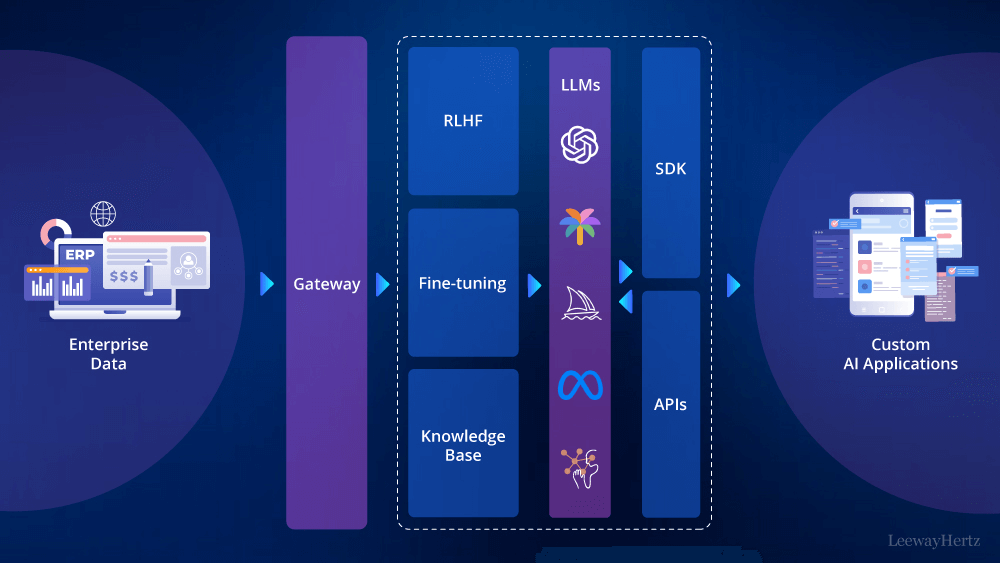
Streamline your operations and supercharge your digital transformation journey with our enterprise AI development services. We harness cutting-edge AI techniques like machine learning, predictive analytics, deep learning, and NLP to create robust AI-powered solutions that address your business challenges. Our scalable solutions cover a wide range of tasks, from predictive maintenance and fraud detection to inventory optimization and enhancing customer services.

Enterprise AI Development Services

  • Strategic AI Consulting: Redefine your AI integration strategy with our expert consultation. We go beyond mere development to align AI solutions with your enterprise objectives, ensuring lasting impact and sustainable growth.
  • Data Analysis: Unlock the hidden potential of your data through our expert analysis services. Our team dives deep into your datasets, revealing actionable insights that drive decision-making and fuel growth, transforming raw data into strategic assets.
  • Enterprise-grade AI Solutions Development: Collaborate with our experienced team to tailor AI solutions to your enterprise needs. From ideation to deployment, we prioritize scalability, performance, and security, ensuring your AI systems meet current demands and adapt to future challenges seamlessly.
  • Seamless AI Integration: Integrate advanced AI capabilities into your existing systems effortlessly with our customized integration services. Our experts ensure a smooth transition, minimizing disruptions and maximizing efficiency during deployment.
  • Maintenance and Support: Keep your custom AI solutions operating optimally with our tailored maintenance and support services. Our dedicated team ensures consistent performance, enhancing operational efficiency and delivering desired outcomes consistently.

Enterprise AI Solutions We Offer

  • Conversational AI Solutions: Enhance customer interactions with our advanced conversational AI solutions. Our AI chatbots engage users in natural conversations, fostering brand loyalty and providing valuable insights into customer trends.
  • AI Image & Speech Recognition Solutions: From virtual assistants to image recognition tools, we develop robust solutions for speech and image recognition, enabling comprehensive visual analysis and enhanced insights.
  • Predictive Analysis Solutions: Anticipate maintenance needs and optimize resource allocation with our predictive analysis tools, ensuring timely equipment upkeep and minimizing downtimes.
  • Fraud Detection & Prevention Solutions: Safeguard your business with our fraud detection and prevention solutions, swiftly identifying irregularities and protecting against financial losses.
  • Customer Service Automation Solutions: Optimize customer service operations with our AI-powered automation solutions, reducing response times and boosting satisfaction.
  • Recommendation Systems: Connect with your audience on a deeper level with our recommendation systems, enhancing user engagement and boosting conversions.

Why Choose Us?

  • Extensive Experience: Benefit from our developers’ expertise and successful collaborations across diverse industries.
  • Full-Cycle Development: Leverage our skills for end-to-end custom solutions designed to drive success.
  • Tech Expertise: Our deep knowledge of AI technologies ensures robust solutions tailored to your needs.
  • Efficient Project Management: Experience precise execution through our agile approach, enhancing success and efficiency.
  • Quality Assurance: Meticulous testing and validation ensure the highest standards of performance and reliability.
  • Secure and Ethical Solutions: Rest assured knowing your projects are safeguarded with the utmost standards of security and ethical conduct.

Conclusion

Our Enterprise AI development services offer a comprehensive solution to your digital transformation needs. From strategic consulting to seamless integration and ongoing support, we’re dedicated to driving tangible results for your business. With our expertise in advanced AI techniques and commitment to quality, security, and ethical conduct, you can trust us to propel your organization toward success. Let’s embark on this journey together and unlock the full potential of AI for your enterprise.

Revolutionizing Logistics and Supply Chain with AI: Unraveling the Benefits

In the fast-paced world of logistics and supply chain management, efficiency, accuracy, and timely delivery are paramount. Traditional methods have served their purpose, but the integration of Artificial Intelligence (AI) is reshaping the landscape, offering unprecedented advantages to businesses. This article explores the transformative impact of AI in logistics and supply chain, shedding light on its benefits and the revolutionary changes it brings to the industry.

The Role of AI in Logistics and Supply Chain

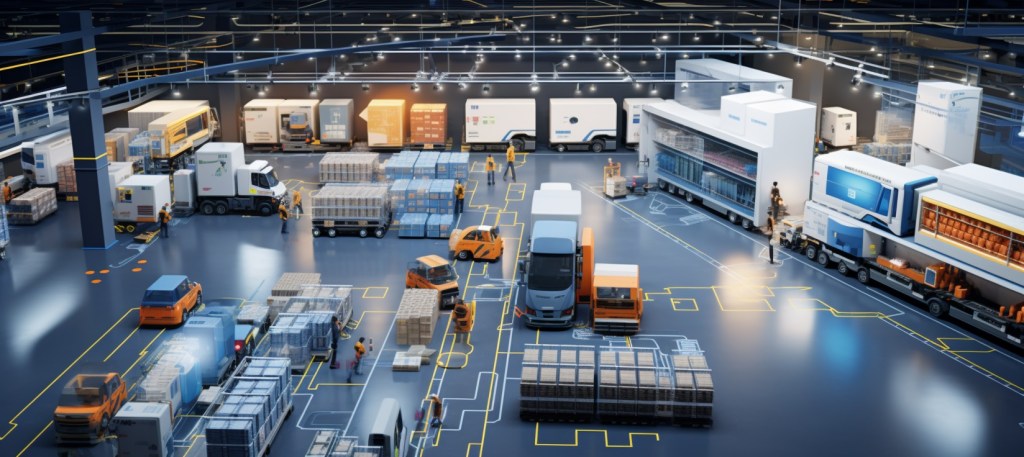
As the backbone of global trade, logistics and supply chain management faces numerous challenges such as optimizing routes, reducing costs, minimizing errors, and ensuring timely deliveries. AI emerges as a game-changer by harnessing the power of data, automation, and machine learning algorithms to streamline operations.

One of the key aspects of AI in logistics is predictive analytics. By analyzing historical data and patterns, AI algorithms can forecast demand, enabling businesses to optimize inventory levels, reduce excess stock, and prevent stockouts. This predictive capability not only enhances inventory management but also contributes to significant cost savings.

Automation is another critical facet of AI implementation in logistics. With the help of robotics and autonomous vehicles, routine tasks such as sorting, packing, and transportation can be automated. This not only accelerates the speed of operations but also minimizes human errors, ultimately improving overall efficiency.

Benefits of AI in Logistics

  1. Enhanced Efficiency: AI optimizes the entire supply chain process, from procurement to delivery. Automation of repetitive tasks reduces the margin for errors, ensuring that operations run smoothly and efficiently.
  2. Real-time Tracking and Visibility: AI-powered systems provide real-time visibility into the movement of goods. This not only enables accurate tracking but also allows for better decision-making, as managers can respond promptly to any deviations or disruptions in the supply chain.
  3. Cost Reduction: By optimizing routes, managing inventory more effectively, and automating manual tasks, AI helps in cutting operational costs. Businesses can allocate resources more efficiently and reduce unnecessary expenditures.
  4. Predictive Maintenance: AI facilitates predictive maintenance for vehicles and machinery used in logistics. By analyzing data from sensors and historical maintenance records, AI algorithms can predict when equipment is likely to fail, enabling proactive maintenance and minimizing downtime.
  5. Dynamic Routing: AI algorithms consider various factors, such as traffic conditions, weather, and road closures, to dynamically optimize delivery routes. This not only ensures timely deliveries but also contributes to fuel efficiency and reduces the environmental impact of transportation.
  6. Customer Satisfaction: With improved efficiency and accurate delivery predictions, AI enhances the overall customer experience. Timely deliveries and transparent tracking contribute to higher customer satisfaction and loyalty.

Case Studies in AI-Driven Logistics

Several real-world examples demonstrate the positive impact of AI in logistics and supply chain management:

  1. Amazon’s Robotics Fulfillment Centers: Amazon utilizes robots in its fulfillment centers to automate the picking and packing process. This has significantly increased the speed of order fulfillment, reduced errors, and improved overall operational efficiency.
  2. UPS’s Route Optimization: United Parcel Service (UPS) employs AI algorithms to optimize delivery routes. This not only minimizes fuel consumption but also ensures that packages reach their destinations faster, contributing to a more sustainable and efficient supply chain.
  3. Maersk’s Predictive Maintenance: Maersk, a global shipping company, employs AI for predictive maintenance of its vessels. By analyzing data from sensors on ships, Maersk can predict equipment failures, schedule maintenance proactively, and avoid costly downtime.

Challenges and Considerations

While the benefits of AI in logistics are substantial, there are challenges that businesses need to address during implementation. Some of these challenges include data security concerns, the initial cost of adopting AI technology, and the need for skilled professionals to manage and interpret the vast amounts of data generated.

Conclusion

AI is undeniably reshaping the future of logistics and supply chain management. The integration of predictive analytics, automation, and machine learning offers unprecedented benefits, ranging from enhanced efficiency and cost reduction to improved customer satisfaction. As businesses continue to navigate the complexities of the modern supply chain, embracing AI is not just a technological advancement but a strategic imperative to stay competitive in the ever-evolving landscape.

Navigating the Future: The Transformative Impact of AI in the Workplace

In the ever-evolving landscape of the modern workplace, the integration of Artificial Intelligence (AI) has become a pivotal force driving innovation, efficiency, and productivity. As organizations strive to stay ahead in a competitive global market, they are increasingly turning to AI to streamline processes, enhance decision-making, and revolutionize the way work is accomplished. In this article, we will explore the multifaceted role of AI in the workplace, delving into its applications, benefits, and the potential challenges organizations may encounter on the path to embracing this transformative technology.

The Rise of AI in the Workplace

The adoption of AI in the workplace is not merely a trend but a strategic imperative. As businesses recognize the immense potential of AI technologies, they are actively incorporating them into their operations to gain a competitive edge. From automating routine tasks to augmenting human capabilities in complex decision-making processes, AI is reshaping the very fabric of how work is conducted.According to a recent report by LeewayHertz, a leading technology development company , AI is increasingly being deployed across various industries, including finance, healthcare, manufacturing, and customer service. The report highlights the profound impact of AI on tasks such as data analysis, predictive maintenance, and customer interactions.

Applications of AI in the Workplace1. Automation of Repetitive Tasks:

One of the primary contributions of AI in the workplace is the automation of mundane and repetitive tasks. Routine administrative chores, data entry, and basic analysis can be efficiently handled by AI-powered systems, allowing employees to focus on more strategic and creative aspects of their roles.

2. Enhanced Decision-Making:

AI algorithms are adept at processing vast amounts of data to derive meaningful insights. In decision-making processes, AI can analyze data at a speed and scale impossible for humans, enabling organizations to make informed choices backed by real-time information.

3. Improved Productivity and Efficiency:

By automating tasks and providing data-driven insights, AI contributes to heightened productivity and efficiency within organizations. Employees can accomplish more in less time, reducing operational costs and increasing overall output.

4. Personalized Learning and Development:

AI is revolutionizing employee training and development through personalized learning experiences. Adaptive learning platforms use AI algorithms to tailor content to individual needs, ensuring that employees acquire the specific skills and knowledge required for their roles.

5. Chatbots for Customer Interaction:

In customer service, AI-powered chatbots have become instrumental in providing instant and efficient responses to customer queries. These virtual assistants enhance customer satisfaction by ensuring prompt and accurate assistance around the clock.

Benefits of AI Adoption in the Workplace1. Increased Productivity:

AI’s ability to automate routine tasks frees up valuable time for employees, enabling them to focus on higher-value activities. This, in turn, boosts overall productivity and allows organizations to achieve more with existing resources.

2. Enhanced Decision Accuracy:

The data-processing capabilities of AI significantly reduce the margin of error in decision-making processes. With access to real-time insights, organizations can make more accurate and informed decisions, minimizing risks and maximizing opportunities.

3. Cost Savings:

Automating repetitive tasks and optimizing processes with AI can lead to substantial cost savings for organizations. Reducing the time and resources required for manual tasks contributes to a leaner and more cost-effective operation.

4. Improved Employee Satisfaction:

As AI takes over mundane tasks, employees are liberated to engage in more meaningful and fulfilling aspects of their work. This shift can lead to increased job satisfaction and a positive impact on employee retention rates.

5. Competitive Advantage:

In a rapidly evolving business landscape, organizations that leverage AI effectively gain a competitive advantage. AI allows for quicker adaptation to market changes, better customer engagement, and a more agile response to industry trends.

Challenges and Considerations

While the benefits of AI adoption in the workplace are undeniable, organizations must also navigate potential challenges and ethical considerations associated with this transformative technology.

1. Job Displacement Concerns:

The automation of certain tasks raises concerns about job displacement. Organizations must proactively address this issue by reskilling employees for roles that complement AI technologies and fostering a culture of continuous learning.

2. Ethical Use of AI:

The ethical implications of AI, including bias in algorithms and data privacy concerns, must be carefully considered. Organizations should prioritize transparency, fairness, and accountability in their AI applications to build trust among employees and stakeholders.

3. Integration Challenges:

Implementing AI systems seamlessly into existing workflows can pose integration challenges. Organizations need a well-thought-out strategy to ensure a smooth transition, providing adequate training and support for employees adapting to AI-powered tools.

4. Security Risks:

AI systems are susceptible to cybersecurity threats. Organizations must invest in robust security measures to safeguard sensitive data and ensure the integrity of AI applications.

Conclusion

In the journey towards a digitally transformed workplace, AI stands as a powerful ally, reshaping the way we work and driving innovation at unprecedented levels. As organizations embrace the potential of AI, they must do so with a keen awareness of the challenges and ethical considerations associated with its adoption. By leveraging the benefits of AI while addressing these concerns, businesses can position themselves at the forefront of technological advancement, ensuring sustained growth and competitiveness in an ever-evolving global market. The integration of AI in the workplace is not just a technological shift but a cultural and strategic evolution that paves the way for a future where human potential is augmented by the limitless possibilities of artificial intelligence.

Transforming Finance: The Impact of AI in Accounting and Auditing

In the ever-evolving landscape of finance, the integration of Artificial Intelligence (AI) has become a game-changer, particularly in the realms of accounting and auditing. As businesses strive for efficiency, accuracy, and enhanced decision-making processes, AI technologies are emerging as invaluable tools in streamlining financial operations. In this article, we will explore the multifaceted role of AI in accounting and auditing, shedding light on the transformative power it brings to these critical functions.

AI in Accounting

AI is revolutionizing the field of accounting by automating mundane tasks, reducing errors, and providing real-time insights. One of the primary applications of AI in accounting is automating data entry and bookkeeping processes. With advanced machine learning algorithms, AI systems can categorize transactions, reconcile accounts, and generate financial statements with remarkable speed and accuracy.

Furthermore, AI-driven predictive analytics enable accountants to forecast financial trends, identify potential risks, and make informed decisions. This proactive approach to financial management allows businesses to adapt to market changes swiftly and strategically allocate resources.

AI’s ability to handle vast amounts of data also facilitates fraud detection and risk management in accounting. By analyzing transaction patterns and identifying anomalies, AI systems can alert auditors to potential fraudulent activities, thereby enhancing the overall integrity of financial reporting.

Moreover, AI-powered chatbots are being integrated into accounting systems to provide instant responses to common queries, improving communication with clients and internal stakeholders. This not only boosts efficiency but also enhances the overall user experience within the accounting domain.

AI in Auditing

Auditing, a meticulous process aimed at ensuring financial transparency and compliance, is undergoing a significant transformation with the infusion of AI technologies. AI enhances the audit process by automating routine tasks, allowing auditors to focus on more complex and judgment-based activities.

One notable application of AI in auditing is the analysis of large datasets. Traditional audit methods involve sampling data, which may not capture the entirety of potential irregularities. AI, on the other hand, can analyze entire datasets, identifying patterns and anomalies that might be overlooked through manual or sampling methods.

Machine learning algorithms can also learn from historical audit data, refining their ability to detect inconsistencies and flag potential issues. This continuous learning process improves the accuracy of audits over time, making the entire process more robust and reliable.

AI-powered tools can conduct a thorough analysis of contracts, invoices, and financial statements, ensuring compliance with regulations and minimizing the risk of errors. This not only expedites the auditing process but also enhances the quality of financial reporting.

Collaboration between AI and auditors is exemplified in the concept of “robotic process automation” (RPA), where repetitive tasks are automated, allowing auditors to focus on critical thinking and judgment-based activities. This synergy between human expertise and AI capabilities results in more comprehensive and insightful audits.

Challenges and Considerations

While the integration of AI in accounting and auditing brings numerous benefits, it is not without its challenges. Data security and privacy concerns are paramount, given the sensitive nature of financial information. It is imperative for organizations to implement robust cybersecurity measures and adhere to data protection regulations to mitigate these risks.

Another challenge is the need for upskilling and reskilling the workforce to adapt to the changing landscape. As AI takes over routine tasks, accountants and auditors must acquire the necessary skills to leverage AI tools effectively and interpret the insights generated by these technologies.

Conclusion

AI’s role in transforming accounting and auditing is undeniable, ushering in a new era of efficiency, accuracy, and strategic decision-making. As businesses strive to stay competitive in an increasingly dynamic environment, embracing AI technologies becomes not just an option but a necessity. The collaborative efforts of AI and financial professionals are reshaping the finance industry, offering unparalleled opportunities for growth and innovation.

As we navigate this exciting intersection of technology and finance, it is crucial for organizations to stay informed, adapt to emerging trends, and leverage the full potential of AI in accounting and auditing. By doing so, they can unlock new levels of productivity, enhance financial transparency, and position themselves for success in the rapidly evolving world of finance.

The Transformative Power of AI-Driven Development: Revolutionizing Software Engineering

In the ever-evolving landscape of technology, Artificial Intelligence (AI) has emerged as a game-changer, disrupting traditional paradigms and reshaping industries. One of the profound impacts of AI is evident in the realm of software development, where AI-driven development has become a driving force behind innovation and efficiency. This article explores the nuances of AI-driven development, its significance in software engineering, and the transformative potential it holds for the future.

Understanding AI-Driven Development

AI-driven development, also known as AI-driven software development or AI-powered development, refers to the integration of Artificial Intelligence and machine learning capabilities into the software development lifecycle. Unlike conventional approaches that heavily rely on manual coding and testing, AI-driven development leverages intelligent algorithms and data-driven insights to automate various aspects of the software development process.

Key Components of AI-Driven Development

  1. Automated Code Generation: One of the most revolutionary aspects of AI-driven development is automated code generation. AI algorithms analyze patterns, learn from existing codebases, and generate code snippets, significantly reducing development time and minimizing human errors. This enables developers to focus on high-level design and problem-solving, while mundane and repetitive coding tasks are handled by the AI.
  2. Predictive Analysis and Debugging: AI’s predictive analytics capabilities play a crucial role in identifying potential issues in the code before they manifest into serious problems. By analyzing historical data, AI algorithms can predict where bugs are likely to occur and offer proactive suggestions to developers. This not only streamlines the debugging process but also enhances the overall reliability and stability of the software.
  3. Enhanced Testing Automation: Traditional software testing can be time-consuming and prone to oversight. AI-driven development introduces advanced testing automation that goes beyond the capabilities of manual testing. Machine learning algorithms can simulate various scenarios, identify edge cases, and execute comprehensive test suites, ensuring robust software performance and minimizing the likelihood of post-release issues.
  4. Intelligent Requirement Analysis: AI algorithms excel in analyzing and interpreting complex requirements. By understanding natural language patterns and context, AI-driven development tools can assist in the extraction and clarification of project requirements, enabling more precise and accurate development efforts. This significantly reduces the chances of misunderstandings between stakeholders and developers.

Significance of AI-Driven Software Development

  1. Increased Efficiency and Productivity: The integration of AI in the development process leads to increased efficiency and productivity. Automated code generation and testing reduce the time required for development cycles, allowing teams to focus on strategic aspects of the project. This not only accelerates time-to-market but also enhances the overall development workflow.
  2. Cost Optimization: AI-driven development contributes to cost optimization by automating repetitive tasks and minimizing the occurrence of errors. With fewer defects in the code, the need for extensive debugging and maintenance is reduced, translating to significant cost savings over the software’s lifecycle.
  3. Continuous Learning and Improvement: AI-driven development systems continuously learn from ongoing projects and user feedback. This iterative learning process results in evolving algorithms that become increasingly adept at understanding project requirements, generating code, and predicting potential issues. This adaptability ensures that AI-driven development tools remain at the forefront of technological advancements.
  4. Facilitation of Complex Projects: Complex software projects often involve intricate coding, extensive testing, and frequent updates. AI-driven development simplifies these complexities by automating time-consuming tasks and providing intelligent insights. This makes it feasible to undertake and successfully execute ambitious projects that may be daunting with conventional development methods.

Challenges and Considerations

While the advantages of AI-driven development are evident, it’s crucial to acknowledge and address the challenges associated with its implementation. Concerns related to data privacy, algorithm bias, and the ethical implications of AI require careful consideration. Additionally, there’s a learning curve for developers transitioning to AI-driven methodologies, necessitating comprehensive training programs and ongoing support.

Conclusion

AI-driven development represents a paradigm shift in software engineering, offering unprecedented opportunities for innovation and efficiency. As organizations increasingly adopt AI-powered development tools, the industry is poised for a transformative journey towards a more intelligent, automated, and agile future. Embracing the potential of AI in software development is not just a technological advancement but a strategic imperative for staying competitive in the rapidly evolving digital landscape.

By leveraging the capabilities of AI-driven development, organizations can redefine the way they approach software engineering, unlocking new possibilities and ushering in an era of unprecedented progress.

Unleashing the Power of AI in Market Research:

In the fast-paced and ever-evolving landscape of business, staying ahead of the competition requires a deep understanding of consumer behavior, market trends, and industry dynamics. In this digital age, where information flows abundantly, traditional market research methods often fall short in providing timely and insightful data. This is where Artificial Intelligence (AI) steps in, reshaping the landscape of market research and offering unprecedented opportunities for businesses to make informed decisions. In this article, we delve into the realm of AI in market research, exploring the transformative impact of AI-driven approaches on gathering and analyzing valuable market insights.

The Rise of AI in Market Research

AI in market research signifies a paradigm shift, where machines take on complex tasks, enabling businesses to process vast amounts of data at unprecedented speeds. Traditional market research methods, while still valuable, often struggle to keep pace with the dynamic nature of today’s markets. AI-powered tools, on the other hand, bring efficiency and precision to the table, allowing researchers to extract meaningful insights from massive datasets.

Smart Data Collection

One of the key advantages of AI in market research is its ability to streamline and enhance the data collection process. Through machine learning algorithms, AI systems can gather, sort, and categorize data from diverse sources, including social media, online forums, and customer feedback. This not only accelerates the data collection phase but also ensures that researchers have access to a more comprehensive and diverse set of information.

Enhanced Consumer Profiling

Understanding consumers is at the heart of effective market research. AI excels in creating detailed consumer profiles by analyzing their online behavior, preferences, and sentiments. Through advanced algorithms, AI-driven market research can identify patterns and trends, providing businesses with a nuanced understanding of their target audience. This, in turn, enables companies to tailor their products, services, and marketing strategies to better resonate with consumer expectations.

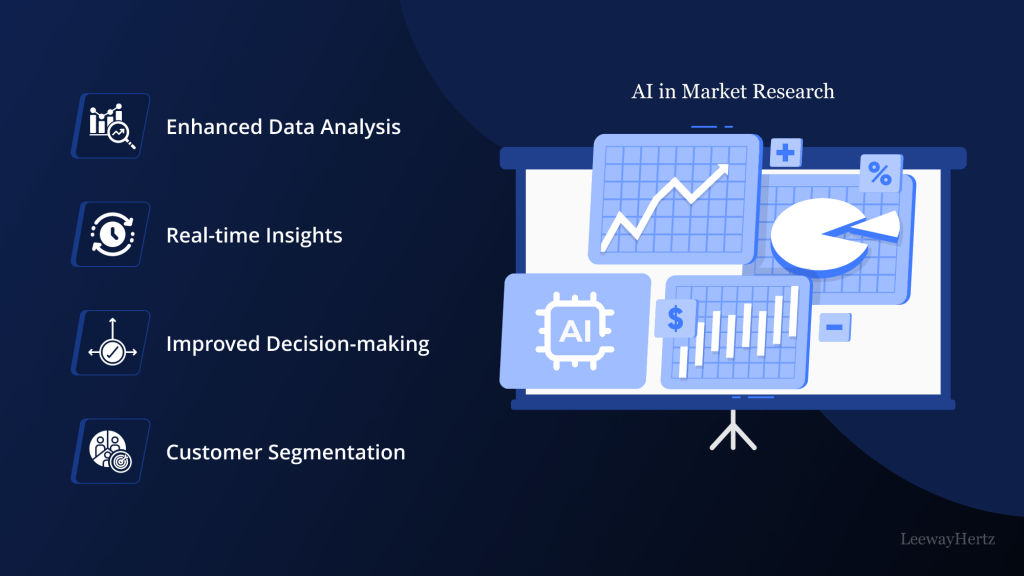
  1. Predictive Analytics for Market Trends:

AI’s predictive analytics capabilities are a game-changer in market research. By analyzing historical data and identifying patterns, AI algorithms can predict market trends, allowing businesses to anticipate shifts in consumer behavior and adjust their strategies accordingly. This foresight is invaluable for businesses seeking a competitive edge in an ever-changing market environment.

  1. Personalized Customer Experiences:

AI-driven market research not only helps businesses understand their customers but also empowers them to deliver personalized experiences. By leveraging AI algorithms, companies can analyze customer data to tailor products and services to individual preferences. This level of personalization not only enhances customer satisfaction but also fosters brand loyalty in an increasingly competitive market.

  1. Real-time Insights:

In the fast-paced business world, timely information is crucial. AI in market research enables real-time data analysis, providing businesses with up-to-the-minute insights. This agility allows companies to respond promptly to emerging trends, market shifts, or changing consumer sentiments, ensuring they remain adaptable and responsive in a dynamic environment.

  1. Cost-Efficiency and Resource Optimization:

AI-driven market research offers a cost-effective solution to businesses by automating repetitive tasks and optimizing resource allocation. Manual data analysis can be time-consuming and prone to errors, whereas AI systems can process vast datasets with unparalleled speed and accuracy. This efficiency translates into cost savings for businesses, allowing them to allocate resources more strategically.

  1. Challenges and Ethical Considerations:

While the benefits of AI in market research are significant, it’s essential to address the challenges and ethical considerations associated with the use of AI. Issues such as data privacy, bias in algorithms, and the potential for job displacement need careful consideration. Striking a balance between harnessing the power of AI and ensuring ethical and responsible use is crucial for the long-term success of AI-driven market research.

  1. Future Outlook:

As technology continues to advance, the future of AI in market research looks promising. The integration of AI with other emerging technologies like blockchain and the Internet of Things (IoT) is set to further enhance the capabilities of market research, providing even more accurate and holistic insights. The ongoing evolution of AI algorithms will likely refine the predictive capabilities of market research, making it an indispensable tool for businesses aiming to stay ahead in an ever-changing market landscape.

Conclusion

AI in market research is not just a technological advancement; it’s a transformative force reshaping how businesses understand, adapt to, and capitalize on market trends. The marriage of artificial intelligence with market research processes opens new doors for innovation and strategic decision-making. As businesses continue to embrace AI-driven market research, they position themselves not only to survive but to thrive in the dynamic and competitive world of commerce. Embracing the power of AI is not just a choice; it’s a necessity for those aiming to lead the way into the future of market research.

Unleashing the Power of ChatGPT Developers: Crafting Innovative Solutions

In the dynamic landscape of artificial intelligence, ChatGPT developers play a pivotal role in shaping the future of conversational interfaces. As businesses strive to enhance user experiences and engagement, the demand for proficient ChatGPT development companies is on the rise. In this blog post, we delve into the realm of ChatGPT developers, exploring their significance and the key considerations when seeking a ChatGPT development company.

Understanding ChatGPT Development

What is ChatGPT?

ChatGPT, developed by OpenAI, is a cutting-edge language model powered by the GPT (Generative Pre-trained Transformer) architecture. It excels in natural language understanding and generation, making it a go-to choice for various applications, from chatbots to content creation.

The Role of ChatGPT Developers

ChatGPT developers are the architects behind the seamless integration of this powerful language model into diverse applications. Their expertise lies in harnessing the capabilities of ChatGPT to create intelligent, context-aware conversational interfaces.

Key Attributes of a Top-notch ChatGPT Development Company

When embarking on the journey to find the right ChatGPT development company, certain key attributes distinguish the best from the rest.

1. Expertise in Natural Language Processing (NLP)

A proficient ChatGPT development company should possess a deep understanding of Natural Language Processing (NLP) principles. This expertise enables developers to fine-tune ChatGPT for specific use cases, ensuring optimal performance.

2. Customization Capabilities

Every business has unique requirements. An exceptional ChatGPT development company should offer customization options to tailor the language model according to the specific needs of the client.

3. Seamless Integration

Integration plays a crucial role in the success of any AI-powered solution. A reliable ChatGPT development company excels in seamlessly integrating the language model into existing systems, ensuring a smooth user experience.

4. Proven Track Record

Client testimonials, case studies, and successful projects are indicative of a company’s competence. A top-notch ChatGPT development company should have a proven track record in delivering high-quality solutions.

Choosing the Right ChatGPT Development Partner

As you explore potential ChatGPT development companies, keep a checklist of your specific requirements. Prioritize companies that align with your business goals, demonstrate technical proficiency, and showcase a commitment to delivering exceptional results.

Why Choose LeewayHertz?

  • Expertise in NLP: LeewayHertz boasts a team of NLP experts who leverage the power of ChatGPT for unparalleled language understanding.
  • Customization: Tailoring ChatGPT to suit diverse business requirements is a forte of LeewayHertz, ensuring a perfect fit for any application.
  • Seamless Integration: The developers at LeewayHertz excel in integrating ChatGPT seamlessly into existing systems, minimizing disruptions and maximizing efficiency.
  • Proven Success: With a portfolio of successful projects and satisfied clients, LeewayHertz has solidified its position as a reliable ChatGPT development partner.

Conclusion

In the realm of AI-driven conversational interfaces, ChatGPT developers play a crucial role in shaping innovation. When seeking a ChatGPT development company, a strategic approach, coupled with a focus on key attributes, ensures the discovery of a reliable and proficient partner. Leverage the power of ChatGPT and unlock new possibilities for your business with a reputable development company like LeewayHertz.