In today’s rapidly evolving digital landscape, the transformative power of Artificial Intelligence (AI) cannot be overstated. From healthcare to finance, from manufacturing to customer service, AI is reshaping industries and revolutionizing the way businesses operate. To harness the potential of AI, many organizations turn to AI development companies, also known as AI development service providers. In this article, we’ll explore the crucial role these companies play and how they are driving innovation across sectors.
Artificial Intelligence Development Company: Pioneers of Innovation
Artificial Intelligence development companies are at the forefront of the AI revolution. They are the architects of cutting-edge AI solutions that empower businesses to make data-driven decisions, enhance customer experiences, automate processes, and create smarter products and services. These companies specialize in developing AI-powered software, applications, and systems tailored to the unique needs of their clients.
AI Development Services: Tailored Solutions for Business Needs
AI development services encompass a wide range of offerings, each designed to address specific business challenges. These services include:
AI Consulting: Before diving into AI development, companies often seek expert advice to determine how AI can benefit their operations. AI development companies provide strategic consulting services to help organizations identify opportunities, set goals, and create a roadmap for AI integration.
Custom AI Solutions: Every business is unique, and AI development companies understand this. They design bespoke AI solutions that align with a company’s goals and objectives. These solutions can range from chatbots and virtual assistants to predictive analytics and recommendation engines.
Machine Learning Development: Machine learning, a subset of AI, is a powerful tool for extracting insights from data. AI development companies excel in building machine learning models that enable businesses to make data-driven decisions and automate processes.
Natural Language Processing (NLP): NLP is crucial for applications like sentiment analysis, language translation, and chatbots. AI development companies specialize in NLP to improve customer interactions and analyze text-based data efficiently.
Computer Vision: Visual data can be a goldmine of information. AI development companies create computer vision solutions that enable businesses to interpret and analyze images and videos for various purposes, from quality control in manufacturing to medical image analysis.
Choosing the Right AI Software Development Company
Selecting the right AI development company is a critical step in embarking on an AI journey. Here are some factors to consider:
Expertise: Look for companies with a proven track record in AI development. They should have a team of experienced data scientists, machine learning engineers, and software developers.
Industry Experience: Consider companies that have experience in your industry. They will be better equipped to understand your specific needs and challenges.
Client References: Check for client testimonials and case studies to gauge the company’s performance and client satisfaction.
Scalability: Ensure that the company can scale its solutions as your business grows and AI adoption expands.
Ethics and Compliance: Given the ethical considerations around AI, choose a company that follows best practices and adheres to regulatory requirements.
Conclusion
Artificial intelligence development companies are the driving force behind the AI revolution. Their expertise, tailored solutions, and commitment to innovation are helping businesses across the globe unlock the potential of AI. Whether you’re a startup looking to integrate AI into your operations or an established enterprise seeking to stay competitive, partnering with an AI development company can be the catalyst for your success in the AI-driven world. Embrace the future with AI, and watch your business soar to new heights.
In recent years, the field of artificial intelligence (AI) has witnessed remarkable advancements, one of which is generative AI development. This cutting-edge technology has gained significant attention due to its ability to create original and innovative content, ranging from images and music to text and even entire virtual worlds. In this blog post, we will delve into the realm of generative AI development, exploring the services offered by leading companies in the industry.
Generative AI Development: A Brief Overview
Generative AI development involves training machine learning models to generate new content by learning patterns and structures from vast amounts of existing data. These models can then generate realistic and creative outputs that mimic the style and characteristics of the training data. This technology has found applications in various domains, including art, design, gaming, and content creation.
Generative AI Development Services
Image Generation: Generative AI models can create stunningly realistic images from scratch. Whether you need personalized avatars, architectural designs, or product prototypes, generative AI development services can generate high-quality visuals tailored to your specifications. These services employ state-of-the-art algorithms to generate visually appealing and unique images that cater to diverse industries.
Music Composition: Generative AI development has opened new avenues in music composition. By analyzing vast music datasets, these models can generate original compositions, melodies, and harmonies in different genres and styles. Whether you are a filmmaker looking for a custom film score or a musician seeking fresh ideas, generative AI development services can provide you with unique musical content.
Text Generation: Generating coherent and contextually relevant text has always been a challenging task for AI models. However, generative AI development services have made significant strides in natural language processing. These services can generate human-like text, whether it is for creative writing, product descriptions, or personalized content. With advanced language models, generative AI development companies can deliver engaging and high-quality text tailored to your needs.
Generative AI Development Companies
LeewayHertz: LeewayHertz is a leading generative AI development company that offers a wide range of services. With a team of experienced AI engineers and data scientists, they leverage cutting-edge technologies to develop innovative solutions. Their expertise in generative AI development allows them to create unique and customized content for clients across various industries. Whether it’s image generation, music composition, or text generation, LeewayHertz provides top-notch generative AI development services.
OpenAI: OpenAI is another prominent name in the field of AI research and development. Their generative AI models, such as GPT-3, have garnered significant attention for their ability to generate coherent and contextually relevant text. OpenAI offers an API that allows developers to access their powerful language models, enabling businesses to integrate generative AI capabilities into their applications and services.
NVIDIA: NVIDIA, renowned for its graphics processing units (GPUs), has also made notable contributions to the field of generative AI development. Their research in generative adversarial networks (GANs) has resulted in impressive advancements in image generation and manipulation. With their expertise in GPU technology, NVIDIA continues to push the boundaries of generative AI, enabling developers and artists to create visually stunning and realistic digital content.
Conclusion
Generative AI development is revolutionizing the way we create and interact with content. From generating lifelike images and composing original music to crafting engaging text, the potential applications of generative AI are vast. Leading companies like LeewayHertz, OpenAI, and NVIDIA are at the forefront of this technology, offering innovative solutions and services to clients across various industries. As generative AI continues to evolve, we can expect further advancements that will reshape the creative landscape and unlock new possibilities for human-machine collaboration.
In the ever-evolving landscape of technology, Artificial Intelligence (AI) continues to revolutionize industries across the globe. One of the most intriguing and transformative branches of AI is Generative AI. It’s a cutting-edge technology that has emerged as a powerful force in creative applications. In this blog, we will delve into the world of Generative AI development and explore how it has revolutionized the way we innovate, create, and solve complex challenges.
What is Generative AI?
Generative AI, also known as Generative Adversarial Networks (GANs), is an AI technique that involves two neural networks, namely the generator and the discriminator, working in tandem to generate new data. The generator creates artificial samples that mimic real-world data, while the discriminator evaluates these samples for authenticity. Through iterative training, both networks improve their performance, leading to the generation of increasingly realistic and sophisticated outputs.
Generative AI Software Development – Unlocking Creative Potential
Generative AI software development is an innovative process that unleashes the creative potential of AI. By harnessing the power of GANs, developers can create AI systems capable of generating art, music, images, and even human-like text. This technology transcends traditional AI’s limitations and opens up exciting possibilities for various industries.
Imagine a scenario where artists and designers use Generative AI to create stunning visual masterpieces or compose unique musical symphonies. With Generative AI software development, creativity knows no bounds, and innovation takes center stage.
Generative AI Services – Transforming Industries
The impact of Generative AI is not confined to the realm of artistry. Industries such as healthcare, finance, manufacturing, and gaming have embraced this technology to drive unprecedented advancements.
Healthcare: Generative AI is revolutionizing medical imaging, enabling more accurate and faster diagnoses. Medical professionals can now generate high-resolution images of organs or anomalies, aiding in the early detection and treatment of diseases.
Finance: Financial institutions leverage Generative AI to analyze market data and predict trends. It enhances risk management, portfolio optimization, and fraud detection, empowering the industry with data-driven decision-making.
Manufacturing: Generative AI optimizes product design by generating countless prototypes, leading to improved efficiency and reduced production costs. This technology streamlines the development process and accelerates innovation in the manufacturing sector.
Gaming: The gaming industry is tapping into Generative AI to create realistic, immersive virtual worlds. From generating lifelike characters to dynamically adapting game environments, Generative AI enhances the gaming experience and challenges the boundaries of imagination.
Generative AI Experts – Pioneering the Future
To harness the true potential of Generative AI, companies require expert guidance and specialized knowledge. That’s where Generative AI experts come into play. These skilled professionals possess a deep understanding of GANs, machine learning algorithms, and creative problem-solving.
A leading name in the Generative AI space is LeewayHertz, a renowned Generative AI development company. With years of experience and a team of seasoned experts, LeewayHertz has been at the forefront of driving innovation through Generative AI.
Generative AI Development – A Collaborative Journey
Generative AI development is not a one-size-fits-all solution. It requires a collaborative approach, with experts working closely with clients to understand their specific needs and goals. The development process involves the following key steps:
Ideation: Collaborating with clients to identify potential use cases and applications of Generative AI tailored to their industry.
Data Collection: Collecting relevant and high-quality datasets to train the AI models effectively.
Model Training: Using the GANs architecture, the generator and discriminator networks are trained iteratively to achieve desired outputs.
Fine-Tuning: Continuously refining the AI models based on client feedback and real-world testing.
Deployment: Implementing the Generative AI solution into the client’s existing infrastructure and providing ongoing support.
Conclusion
As the world embraces the era of artificial intelligence, Generative AI stands out as a transformative force in unleashing creativity, enhancing problem-solving capabilities, and driving innovation. From creating awe-inspiring art to transforming industries with data-driven insights, Generative AI development has the potential to reshape our future.
With the expertise of Generative AI experts like LeewayHertz, businesses can embark on a collaborative journey to explore the untapped possibilities of this groundbreaking technology. The future is now, and Generative AI is leading the way towards a new era of limitless innovation and creative expression.
In the age of information, businesses are constantly seeking innovative ways to harness the power of data. One such breakthrough technology that has revolutionized the world of data analytics is Artificial Intelligence (AI). In this article, we will delve deep into the realm of AI in data analytics, shedding light on its significance, applications, and how it can drive actionable insights from data.
Understanding AI in Data Analytics
AI in data analytics refers to the integration of artificial intelligence techniques and algorithms to analyze large datasets, extract valuable insights, and make data-driven decisions. This powerful combination enhances the efficiency and accuracy of data analysis, transforming it into a strategic asset for organizations across various industries.
The Significance of AI in Data Analytics
Data analytics has always played a pivotal role in decision-making, but AI takes it to a whole new level. Here are some key reasons why AI is indispensable in the field of data analytics:
Advanced Pattern Recognition: AI algorithms excel at identifying complex patterns and trends within data that might be difficult to discern using traditional methods. This capability allows organizations to uncover hidden insights and make more informed decisions.
Real-time Analytics: AI-driven data analytics systems can process vast amounts of data in real-time, providing organizations with up-to-the-minute insights. This agility is crucial in industries where timely decisions can make a significant impact, such as finance or healthcare.
Predictive Analytics: AI models can predict future trends and outcomes based on historical data, enabling organizations to proactively address potential issues or opportunities. This proactive approach is invaluable for optimizing business operations.
Automation: AI automates repetitive data analysis tasks, reducing the workload on human analysts. This not only saves time but also minimizes the risk of errors in the analysis process.
Personalization: In marketing and customer service, AI-powered data analytics can be used to create highly personalized experiences for customers, leading to increased customer satisfaction and retention.
Applications of AI in Data Analytics
The applications of AI in data analytics are vast and diverse, spanning across various industries. Here are some notable examples:
Business Intelligence: AI-driven business intelligence tools help organizations gain a deeper understanding of their operations, market trends, and customer behavior. This knowledge empowers them to make data-driven decisions that can drive growth and efficiency.
Healthcare Analytics: AI is revolutionizing healthcare by analyzing patient data to improve diagnoses, treatment plans, and disease predictions. It also plays a crucial role in drug discovery and clinical research.
Finance: In the financial sector, AI-powered analytics tools are used for fraud detection, risk assessment, and algorithmic trading. These applications enhance the accuracy and speed of financial decision-making.
E-commerce: Online retailers use AI to analyze customer data and provide personalized product recommendations. This boosts sales and enhances the overall shopping experience.
Manufacturing: AI-driven analytics in manufacturing help optimize production processes, predict equipment maintenance needs, and ensure product quality.
Social Media and Marketing: AI analyzes social media data to track brand sentiment, identify trends, and target advertising to specific demographics.
Challenges and Considerations
While AI in data analytics holds immense potential, there are several challenges and considerations to keep in mind:
Data Privacy and Security: Handling large volumes of data requires robust security measures to protect sensitive information from breaches.
Data Quality: AI relies heavily on data quality. Inaccurate or incomplete data can lead to misleading insights.
Ethical Concerns: There are ethical considerations surrounding the use of AI in data analytics, especially when it comes to privacy, bias, and transparency.
Skill Gap: Organizations need skilled data scientists and analysts who can work with AI tools effectively.
Regulatory Compliance: Compliance with data protection regulations is crucial, and AI systems must adhere to these rules.
Conclusion
AI in data analytics is a game-changer for businesses seeking to gain a competitive edge in today’s data-driven world. It empowers organizations to unlock the full potential of their data, making it a strategic asset for growth and innovation. By harnessing the capabilities of AI, organizations can uncover valuable insights, enhance decision-making, and stay ahead of the curve in their respective industries. However, it’s essential to approach AI in data analytics with caution, addressing privacy, security, and ethical concerns to ensure its responsible and effective use. As AI continues to evolve, its role in data analytics will only become more significant, shaping the future of data-driven decision-making.
In an era where technology reigns supreme, Artificial Intelligence (AI) is the driving force behind transformative changes across various industries. From data analytics and customer support to procurement, HR, security, sentiment analysis, anomaly detection, and trade promotion, AI is reshaping how businesses operate. In this series, we explore the profound impact of AI in each of these domains, unveiling how it streamlines processes, enhances decision-making, improves customer experiences, and leads us towards a data-driven future.
Unlocking Insights: The Role of AI in Data Analytics
In today’s fast-paced, data-driven world, businesses across industries are constantly seeking new ways to harness the power of data. This quest has given rise to the integration of Artificial Intelligence (AI) in data analytics, revolutionizing the way organizations extract insights from their data and make informed decisions.
Introduction: The Marriage of AI and Data Analytics
Data analytics has long been a crucial tool for organizations to gain insights into their operations, customer behaviors, and market trends. However, as data volumes continue to soar, traditional analytics methods have started to show their limitations. This is where AI steps in, offering the promise of unlocking deeper insights, predicting future trends, and optimizing decision-making processes.
The Evolution of Data Analytics with AI
Traditional data analytics primarily relies on historical data and predefined rules to derive insights. In contrast, AI-powered data analytics leverages advanced machine learning algorithms to discover patterns, anomalies, and correlations that may be hidden to human analysts. This evolution has paved the way for predictive and prescriptive analytics, allowing businesses to anticipate future outcomes and take proactive measures.
Real-World Examples of AI-Driven Data Analytics
AI-driven data analytics is making a substantial impact across various industries. For instance, in healthcare, AI algorithms analyze patient data to assist in disease diagnosis and treatment recommendations. Financial institutions use AI to detect fraudulent transactions in real-time, saving billions of dollars annually. Retailers employ AI to optimize pricing strategies and predict customer demand, leading to increased revenue.
The Impact of AI in Making Data-Driven Decisions
One of the most significant benefits of AI in data analytics is its ability to enhance decision-making processes. AI algorithms process vast amounts of data quickly, providing actionable insights in near real-time. This empowers businesses to make informed decisions that drive efficiency, reduce costs, and improve customer experiences.
The Future of Data Analytics with AI
As AI continues to advance, the future of data analytics looks promising. Expectations include AI systems that can explain their reasoning, improved automation of data preparation, and more accessible AI tools for non-technical users. The key to success will be striking a balance between human expertise and AI capabilities.
Revolutionizing Customer Support with AI
Customer support is a critical aspect of any business, and it has traditionally relied on human agents to address customer inquiries and issues. However, the advent of Artificial Intelligence (AI) is revolutionizing the customer support landscape, offering new ways to enhance efficiency, reduce response times, and provide personalized experiences.
The Changing Face of Customer Support
Customer support is undergoing a significant transformation, driven by advances in AI technologies. Traditional support methods often involve long wait times and scripted responses, leading to frustration among customers. AI-powered solutions aim to address these pain points and deliver a more efficient and customer-centric support experience.
How AI-Powered Chatbots are Transforming Customer Support
Chatbots, powered by AI, have become a staple in the world of customer support. These virtual agents can handle a wide range of customer inquiries 24/7, ensuring that support is available whenever customers need it. Chatbots use natural language processing (NLP) to understand and respond to customer queries, making interactions feel more human-like.
Case Studies Showcasing AI-Driven Customer Support Solutions
Numerous companies have embraced AI-driven customer support with impressive results. For example, a leading e-commerce platform implemented a chatbot that reduced response times by 50%, leading to a 30% increase in customer satisfaction. Another company in the telecommunications sector saw a 40% reduction in support costs after adopting AI-powered chatbots.
Benefits of AI for Providing Personalized Customer Experiences
AI not only streamlines support processes but also enables personalization at scale. By analyzing customer data, AI systems can provide tailored recommendations and solutions. This personal touch enhances customer loyalty and drives higher conversion rates, as customers feel understood and valued by the brand.
The Future of AI in Customer Support and Its Potential
The future of AI in customer support holds even more promise. AI-driven support will likely involve more sophisticated chatbots capable of handling complex inquiries and emotional cues. Additionally, AI will play a significant role in predictive customer support, anticipating issues before they arise and proactively addressing them.
Efficiency Unleashed: AI in Procurement
Procurement is a fundamental function for organizations across industries, responsible for sourcing goods and services essential for operations. The integration of Artificial Intelligence (AI) in procurement processes is revolutionizing the way businesses manage their supply chains, leading to cost savings, increased efficiency, and improved decision-making.
The Significance of Procurement
Procurement is the backbone of many businesses, ensuring that the right resources are acquired at the right time and cost. Traditionally, procurement involved manual processes, but the advent of AI is transforming this function into a strategic powerhouse.
How AI Streamlines Procurement Processes
AI brings automation and intelligence to procurement, making processes faster and more accurate. Machine learning algorithms can analyze historical data to predict demand, optimize inventory levels, and even negotiate with suppliers to secure the best deals. These capabilities reduce human errors and enhance efficiency.
Case Studies Highlighting AI’s Impact on Cost Savings and Supply Chain Optimization
Leading companies are already reaping the benefits of AI in procurement. A global manufacturing firm implemented AI-driven demand forecasting, resulting in a 15% reduction in excess inventory and a 10% decrease in stockouts. In the logistics sector, AI-driven route optimization reduced transportation costs by 20%.
The Potential of AI in Shaping the Future of Procurement
The future of procurement holds significant potential for AI. Emerging technologies like blockchain will ensure transparency and traceability in supply chains, reducing the risk of fraud and counterfeiting. Procurement professionals will increasingly rely on AI-driven insights to make strategic decisions that impact the entire organization.
Elevating HR Practices with AI
Human Resources (HR) is the heart of any organization, responsible for managing talent, fostering a positive workplace culture, and driving employee engagement. The infusion of Artificial Intelligence (AI) in HR processes is transforming the way businesses recruit, develop, and retain their workforce, ultimately leading to more effective and data-driven HR practices.
The Changing Landscape of HR
HR has evolved from a primarily administrative function to a strategic partner for organizations. In this transformation, AI plays a pivotal role by automating routine tasks, providing data-driven insights, and enhancing the overall HR experience for both employees and employers.
The Application of AI in Talent Acquisition and Recruitment
Talent acquisition is a critical function for any organization, and AI is revolutionizing the way companies identify and hire top talent. AI-driven tools can sift through resumes, conduct initial screenings, and even predict candidate success based on historical data, significantly reducing time-to-hire and improving the quality of candidates selected.
Enhancing Employee Engagement and Retention through AI
Employee engagement and retention are vital for an organization’s success. AI helps by analyzing employee sentiment, identifying factors that contribute to turnover, and suggesting interventions to improve job satisfaction. Personalized development plans driven by AI can also boost employee growth and loyalty.
Real-Life Examples of Organizations Leveraging AI for HR Benefits
Numerous organizations are witnessing the positive impact of AI in HR. A global tech company, for instance, used AI-powered surveys to uncover issues affecting employee engagement. As a result, they implemented targeted initiatives that led to a 15% increase in employee satisfaction within a year.
Future Trends in AI-Driven HR Practices
The future of HR lies in further integration with AI technologies. Chatbots will provide instant support for employee queries, AI-driven analytics will enable proactive HR decision-making, and predictive models will anticipate workforce needs, ensuring businesses can adapt to changing dynamics efficiently.
Optimizing Trade Promotion with AI
Trade promotion is a cornerstone of sales and marketing strategies for many businesses. The integration of Artificial Intelligence (AI) in trade promotion optimization is revolutionizing the way companies plan and execute promotional campaigns, leading to increased revenue, improved demand forecasting, and enhanced ROI.
The Role of Trade Promotion in Business
Trade promotion involves a range of activities aimed at boosting sales and brand visibility. However, traditional methods often suffer from inefficiencies and a lack of data-driven decision-making. AI is changing this landscape by offering tools for smarter trade promotion strategies.
The Evolving Landscape of Trade Promotion and Its Challenges
Trade promotion has historically been resource-intensive and challenging to measure. AI addresses these issues by providing data-driven insights into which promotions work and which don’t. This ensures that businesses can allocate resources effectively and maximize ROI.
Advanced AI Techniques for Trade Promotion Optimization
AI is not limited to automating repetitive tasks; it also leverages advanced techniques like machine learning to predict consumer behavior and optimize promotion strategies. Machine learning models can analyze vast datasets to identify patterns and trends, allowing companies to tailor promotions to specific customer segments.
Real-World Examples of Companies Leveraging AI in Trade Promotion
Leading companies in various industries are already reaping the benefits of AI in trade promotion. A multinational consumer goods corporation implemented AI-driven demand forecasting, leading to a 15% reduction in excess inventory and a 10% decrease in stockouts. In the retail sector, AI-powered dynamic pricing strategies increased sales by 20%.
Concluding Thoughts on the Broader Implications of AI in Trade Promotion
The future of trade promotion is closely tied to AI’s continued evolution. Businesses that embrace AI in this realm will likely see not only improved promotional outcomes but also a competitive edge in the market. As AI technologies continue to advance, trade promotion will become more dynamic, data-driven, and responsive to customer needs.
Anomaly Detection: How AI Is Transforming Security and Risk Management
In today’s digital age, organizations face a growing challenge in safeguarding their data and assets from various threats. The integration of Artificial Intelligence (AI) in anomaly detection is revolutionizing security and risk management practices, enabling businesses to identify and mitigate potential risks with unprecedented accuracy and speed.
The Rising Importance of Anomaly Detection
Anomaly detection is a critical component of modern security and risk management. Traditional methods often struggle to keep pace with evolving threats. AI-powered anomaly detection systems, on the other hand, can analyze vast amounts of data in real-time, making them indispensable in today’s threat landscape.
How AI-Powered Anomaly Detection Works
AI-driven anomaly detection relies on advanced machine learning algorithms to establish normal behavior patterns within a system. Any deviations from these established norms are flagged as anomalies, signaling potential security breaches or operational issues. This proactive approach allows organizations to respond swiftly to emerging threats.
Real-World Examples of AI’s Role in Identifying Security Threats and Risks
AI-driven anomaly detection has made a significant impact across various sectors. In the financial industry, AI is used to detect fraudulent transactions by analyzing transaction patterns. In cybersecurity, AI can spot unusual network behavior indicative of a cyberattack. These applications have resulted in substantial reductions in risks and losses.
The Advantages of Using AI for Proactive Risk Mitigation
One of the primary advantages of AI in anomaly detection is its ability to provide real-time alerts and proactive risk mitigation. Organizations can respond to threats as they happen, preventing potential damage and financial losses. Additionally, AI continuously learns and adapts to new threats, staying ahead of evolving risks.
The Future of AI-Driven Anomaly Detection for Enhanced Security
As AI technologies continue to evolve, the future of anomaly detection in security and risk management holds great promise. AI systems will become more sophisticated, capable of detecting even subtle anomalies. Moreover, AI will play a crucial role in automated incident response, further bolstering organizational security.
Understanding Customer Sentiments: AI in Sentiment Analysis
In the age of social media and online reviews, understanding customer sentiments is crucial for businesses. The integration of Artificial Intelligence (AI) in sentiment analysis is changing the way companies gather and leverage customer feedback to enhance their products, services, and brand reputation.
Introduction: The Power of Customer Sentiment
Customer sentiment analysis involves the extraction of emotional cues and opinions expressed by customers. Traditionally, this was a manual and time-consuming process. However, AI has transformed sentiment analysis into a scalable and actionable tool for businesses seeking to improve their customer experiences.
How AI-Driven Sentiment Analysis Works
AI-driven sentiment analysis relies on natural language processing (NLP) and machine learning algorithms to decipher customer sentiments from text data. It categorizes text as positive, negative, or neutral and can even identify specific emotions such as joy, anger, or frustration. This automation allows businesses to process vast amounts of feedback efficiently.
Case Studies Showcasing AI-Driven Customer Sentiment Solutions
Numerous companies have embraced AI-driven sentiment analysis with impressive results. For instance, a leading e-commerce platform uses sentiment analysis to gain insights from customer reviews, allowing them to identify product improvements and marketing strategies. Another company in the hospitality sector leverages sentiment analysis to assess guest satisfaction and tailor their services accordingly.
Leveraging Sentiment Analysis for Improving Brand Reputation and Customer Satisfaction
AI-powered sentiment analysis provides businesses with actionable insights into customer feedback, enabling them to address pain points, improve products and services, and enhance overall customer satisfaction. Moreover, it plays a crucial role in managing brand reputation by swiftly responding to negative sentiments and issues.
Future Trends in AI-Powered Sentiment Analysis for Businesses
The future of sentiment analysis in business will likely involve even more nuanced and context-aware AI models. This will enable companies to understand customer sentiments in greater depth, leading to more targeted and effective strategies for customer engagement and product development.
Conclusion
As we conclude this enlightening series on the transformative power of AI across diverse industries, we recognize the unifying theme of innovation. AI is not merely a tool; it’s a dynamic force propelling organizations towards the forefront of progress. It empowers them to harness the full potential of data, elevate their operations, and deliver exceptional products and services. In our ongoing journey through the ever-evolving landscape of AI, it becomes evident that this technology isn’t just a fleeting trend but a profound and ongoing transformation. It equips businesses to not only adapt but thrive, leading us towards a more efficient, customer-focused, and secure future.
In today’s fast-paced digital landscape, businesses are constantly seeking innovative ways to gain a competitive edge. Artificial Intelligence (AI) has emerged as a game-changing technology, empowering companies to enhance their operations, deliver personalized experiences, and make data-driven decisions. As the demand for AI-driven solutions continues to surge, AI Development Services have become indispensable. This article explores the significance of AI Development Services and the role they play in transforming businesses.
The Rise of AI Development Services
In recent years, the realm of AI has evolved exponentially, leading to the emergence of specialized AI Development Companies. These companies, comprising talented AI Developers, have leveraged their expertise to bridge the gap between complex AI technology and practical applications for businesses.
AI Development Services
AI Development Services encompass a wide array of offerings designed to address diverse business needs. From developing cutting-edge AI algorithms to building sophisticated AI-powered applications, these services cover it all.
1. AI Development: The Core Offering
At the heart of AI Development Services lies the creation of AI models and algorithms. AI Developers, armed with deep knowledge of machine learning and neural networks, craft bespoke solutions tailored to the unique requirements of each client. These experts utilize advanced programming languages and frameworks to build AI systems capable of tasks such as image recognition, natural language processing, and predictive analytics.
2. Artificial Intelligence Application Development
Another pivotal aspect of AI Development Services is the development of AI-powered applications. Whether it’s a recommendation engine for an e-commerce platform or a chatbot for customer support, AI Development Companies excel in creating applications that enhance user experiences and streamline operations. These applications leverage AI to process vast amounts of data in real-time, enabling businesses to make informed decisions swiftly.
3. Integration and Deployment
The journey doesn’t end with AI development; seamless integration and deployment are equally crucial. AI Development Services Companies ensure that AI solutions seamlessly integrate with existing systems and are optimized for performance. This meticulous approach guarantees that AI becomes a natural part of the organization’s workflow.
4. Continuous Improvement
AI models require continuous refinement to adapt to changing data patterns and evolving business needs. AI Development Services include ongoing support and maintenance to ensure that AI systems remain accurate and effective over time. This commitment to improvement enhances the longevity of AI investments.
Why Partner with an AI Development Company?
Collaborating with a specialized AI Development Services Company offers several advantages. Here’s why businesses are increasingly turning to these experts:
1. Expertise and Experience
AI Developers possess a deep understanding of AI technologies, making them well-equipped to navigate the complexities of AI development. Their experience allows them to craft robust and efficient AI solutions that yield tangible results.
2. Tailored Solutions
AI Development Companies understand that one-size-fits-all solutions don’t work in the AI landscape. They tailor their services to align with the specific goals and challenges of each client, ensuring that AI adds real value to the business.
3. Speed and Efficiency
In a rapidly evolving business environment, speed is of the essence. AI Development Services Companies can expedite the development process, allowing businesses to harness AI’s power sooner and stay ahead of the competition.
4. Cost-Effective Solutions
Outsourcing AI development to experts can often be more cost-effective than attempting an in-house approach. AI Development Services Companies have the necessary infrastructure and resources in place, reducing the client’s investment in AI development.
5. Scalability
As businesses grow, their AI needs may evolve. AI Development Companies are well-equipped to scale AI solutions to meet the changing demands of an organization, ensuring that AI remains a valuable asset.
Conclusion
AI Development Services Companies are at the forefront of the AI revolution, enabling businesses to unlock the full potential of artificial intelligence. These experts, armed with their knowledge, experience, and dedication, are transforming industries by developing AI models, creating innovative applications, and delivering tailored solutions that drive growth and efficiency.
In a world where data is king, AI Development Services are the key to harnessing the power of AI and gaining a competitive edge. As businesses continue to embrace AI, partnering with a reputable AI Development Services Company is not just an option; it’s a strategic imperative. In the dynamic landscape of today and tomorrow, AI is not just an advantage – it’s a necessity, and AI Development Services Companies are the partners that can make it a reality.
Artificial intelligence has made tremendous advancements in natural language processing (NLP), and one of the most remarkable achievements in this field is the development of Generative Pre-trained Transformer (GPT) models. These models have revolutionized various tasks, including language translation, text completion, and even creative writing. In this blog, we will explore the process of building a GPT model, from training to deployment, and discuss how it can be used to generate human-like text.
Understanding GPT Models
GPT models are based on the Transformer architecture, which utilizes self-attention mechanisms to capture the relationships between different words in a sentence. This architecture enables GPT models to generate coherent and contextually relevant text. GPT models are usually trained on large amounts of data, allowing them to learn patterns and generate text that closely resembles human-written content.
Training a GPT Model
Data Collection: To build a GPT model, the first step is to gather a large and diverse dataset that represents the domain or style of text you want the model to generate. The data can come from a variety of sources, such as books, articles, or websites. Quality and diversity are key factors in ensuring the model’s ability to generate high-quality text.
Preprocessing: Once you have collected the data, it needs to be preprocessed to remove any irrelevant information, correct spelling mistakes, and tokenize the text into smaller units, such as words or subwords. Preprocessing ensures that the data is in a format that can be easily fed into the GPT model during training.
Model Architecture: The next step is to define the architecture of the GPT model. This involves deciding the number of layers, the size of the model, and other hyperparameters. The Transformer architecture is commonly used for GPT models, but modifications can be made based on the specific requirements of the task at hand.
Training the Model: Training a GPT model involves two key stages: pre-training and fine-tuning. Pre-training involves training the model on a large corpus of text data, such as the dataset collected earlier. During this phase, the model learns the statistical properties of the language and develops a general understanding of grammar, context, and coherence.
After pre-training, the model is fine-tuned on a smaller dataset that is more specific to the desired task. Fine-tuning helps the model adapt to the specific nuances and style of the target domain, resulting in improved performance.
Evaluation and Iteration: Throughout the training process, it is important to evaluate the model’s performance using appropriate metrics. Common evaluation metrics include perplexity, BLEU score, and human evaluation. Based on the evaluation results, the model can be further fine-tuned or adjusted to enhance its performance.
Deploying and Using a GPT Model
Once the GPT model has been trained, it can be deployed and used to generate text. There are several ways to utilize a GPT model:
Text Completion: GPT models can be used to complete partial sentences or generate entire paragraphs of text based on a given prompt. This functionality is particularly useful in applications such as chatbots, content generation, and email drafting.
Language Translation: GPT models can also be employed for language translation tasks. By training the model on parallel datasets of different languages, it can learn to generate translations that capture the meaning and context of the source text.
Creative Writing: With their ability to generate coherent and contextually relevant text, GPT models can be utilized for creative writing purposes. They can assist authors, poets, and content creators in generating ideas, providing inspiration, or even co-writing pieces.
Conclusion
Building a GPT model involves collecting and preprocessing data, defining the model architecture, and training the model through pre-training and fine-tuning. These models have the potential to generate high-quality text that closely resembles human writing. Whether it is completing sentences, translating languages, or assisting in creative writing, GPT models have a wide range of applications. With further advancements in the field of NLP, we can expect even more sophisticated and powerful GPT models to emerge, reshaping the way we interact with and generate text.
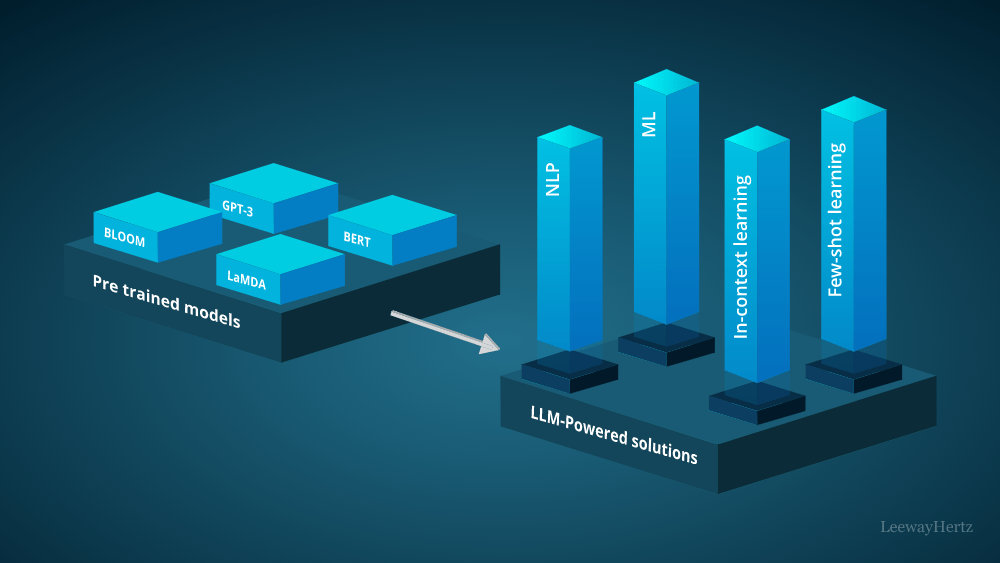
In a world where information is key, language models have become the cornerstone of artificial intelligence (AI) development. These Large Language Models (LLMs) have revolutionized the way we interact with technology, enabling machines to understand, generate, and respond to human language. As businesses strive to stay ahead in this ever-evolving landscape, the demand for cutting-edge LLMs and expert LLM developers is at an all-time high. Enter the realm of AI Large Language Model Development Services – your gateway to harnessing the potential of these remarkable technologies.
AI Large Language Model Development Company: Pioneering the Future
As organizations across the globe recognize the transformative power of LLMs, the need for a reliable and innovative AI Large Language Model Development Company becomes evident. Such a company plays a pivotal role in crafting customized language models that cater to the unique requirements of various industries.
Whether it’s enhancing customer support through chatbots, streamlining content generation, automating data analysis, or creating conversational AI, an AI Large Language Model Development Company can turn your AI dreams into reality. These companies have a team of seasoned LLM developers who possess the expertise to design, train, and deploy state-of-the-art language models.
Large Language Model Development Services: Navigating the Possibilities
Large Language Model Development Services encompass a wide range of solutions aimed at leveraging LLMs for diverse applications. These services are designed to help businesses enhance efficiency, customer experience, and innovation.
Here’s a glimpse of what Large Language Model Development Services can offer:
Custom Model Development: Tailored LLM models designed to meet specific business objectives, such as content generation, sentiment analysis, or natural language understanding.
Training and Fine-tuning: The art of refining LLMs through continuous learning and data-driven fine-tuning to ensure they evolve with your needs.
Integration and Deployment: Seamless integration of LLMs into your existing systems, applications, or websites, making them AI-ready.
Performance Optimization: Ongoing monitoring and optimization to ensure your LLMs perform at their peak, providing accurate and valuable results.
Consultation and Strategy: Expert guidance on how to best utilize LLMs for your business goals, keeping you at the forefront of AI innovation.
LLM Models: Unveiling the Potential
Large Language Models, often abbreviated as LLMs, are the driving force behind the AI revolution. These models are the culmination of years of research and development, boasting billions of parameters that enable them to understand, generate, and manipulate text in an eerily human-like manner.
The versatility of LLMs is astonishing. They can perform tasks ranging from language translation and text summarization to generating creative content and even engaging in meaningful conversations. Businesses that harness the power of LLM models gain a competitive edge by automating tasks, personalizing user experiences, and extracting valuable insights from vast amounts of textual data.
LLM Developers: Architects of the Future
Behind every successful LLM model stands a team of skilled LLM developers. These experts are the architects who design and shape the AI landscape. They are well-versed in machine learning, natural language processing, and data science, making them the driving force behind the development and deployment of LLMs.
Collaborating with experienced LLM developers ensures that your AI projects are in capable hands. Their knowledge, creativity, and dedication are what make the difference between an ordinary language model and one that truly stands out in the AI arena.
Conclusion
The future belongs to those who embrace innovation, and in the world of AI, Large Language Models are at the forefront of innovation. To harness their transformative power, partnering with an AI Large Language Model Development Company and availing Large Language Model Development Services is the key.
LLMs are not just tools; they are a gateway to revolutionizing how businesses operate, interact, and grow in the digital age. So, take the leap, explore the limitless possibilities, and let LLM developers pave the way to a brighter, AI-powered future for your organization.
In the realm of artificial intelligence (AI), language models have emerged as a transformative technology that enables machines to understand and generate human-like text. These models have undergone significant advancements in recent years, and one notable breakthrough is the development of large language models. In this blog post, we will explore the concept of large language model development and its incredible potential for revolutionizing various industries.
Understanding Large Language Models
Large language models, also known as LLMs, are AI models that possess an extensive amount of knowledge and linguistic capabilities. These models are typically trained on massive datasets, encompassing vast amounts of text from diverse sources such as books, articles, websites, and more. By processing and analyzing this vast corpus of information, LLMs can generate coherent and contextually appropriate text responses.
The Development Process: Creating large language models requires advanced expertise and specialized techniques. This is where a proficient large language model development company, like LeewayHertz, plays a pivotal role. Such companies employ a team of skilled AI engineers and researchers who leverage cutting-edge techniques like deep learning and natural language processing (NLP) to train and fine-tune LLMs.
Data Preprocessing: The first step in developing a large language model involves preprocessing the training data. This includes cleaning and formatting the data to ensure consistency and remove any noise or irrelevant information. Preprocessing techniques may involve tokenization, stemming, lemmatization, and removing stop words, among others.
Training the Model: The training process begins by feeding the preprocessed data into the model. The model learns patterns, relationships, and linguistic nuances from the input data through iterative training steps. This process involves optimizing various parameters, such as the number of layers, the size of the hidden state, and the learning rate, to achieve the desired performance.
Fine-tuning: After the initial training, the model is fine-tuned on specific tasks or domains to enhance its performance and make it more specialized. Fine-tuning involves exposing the model to domain-specific data and allowing it to learn the intricacies of the target domain. This step is crucial for tailoring the model to specific applications, such as chatbots, virtual assistants, or content generation systems.
Applications of Large Language Models
The development of large language models has opened up a world of possibilities across various industries. Let’s explore a few key applications:
Natural Language Processing: Large language models have revolutionized NLP tasks such as sentiment analysis, language translation, and text summarization. Their advanced language understanding capabilities enable more accurate and context-aware results.
Content Generation: LLMs can be leveraged to generate high-quality content for marketing campaigns, social media, and even creative writing. They can produce coherent and engaging text that mimics human-like writing styles.
Customer Support and Chatbots: LLMs can power intelligent chatbots capable of understanding and responding to customer queries with greater accuracy and naturalness. This enhances customer support services and reduces response times.
Knowledge Base and Information Retrieval: Large language models can serve as powerful tools for building knowledge bases and information retrieval systems. They can quickly analyze and retrieve relevant information from vast repositories, aiding researchers, professionals, and users seeking information.
The Ethical Considerations
While large language models bring significant benefits, their development also raises ethical concerns. The potential for bias, misuse of information, and the generation of misleading content are important issues that need to be addressed. Responsible AI practices, continuous monitoring, and transparency are essential to mitigate these concerns.
Conclusion
Large language model development has revolutionized the field of AI, enabling machines to comprehend and generate human-like text at an unprecedented scale. With the expertise of a reliable development company like LeewayHertz, organizations can harness the potential of large language models and unlock new avenues of innovation and efficiency across various domains. As this technology continues to evolve, it is crucial to prioritize ethical considerations to ensure responsible and beneficial use.
In the rapidly evolving world of technology, the integration of Artificial Intelligence (AI) has been a game-changer across various industries. One sector that has witnessed remarkable transformations is mobile app development. With the emergence of AI-powered mobile app development companies, the possibilities seem limitless, giving rise to a new era of innovation and efficiency.
Unveiling the Force Behind AI-Powered Mobile App Development Companies
In the digital age, mobile apps have become an integral part of our lives, simplifying tasks and providing unparalleled convenience. However, the landscape of app development has taken an extraordinary turn with the infusion of AI technology. AI-powered mobile app development companies, such as LeewayHertz, are at the forefront of this revolution, crafting applications that not only meet but exceed user expectations.
The Synergy of AI and Mobile App Development
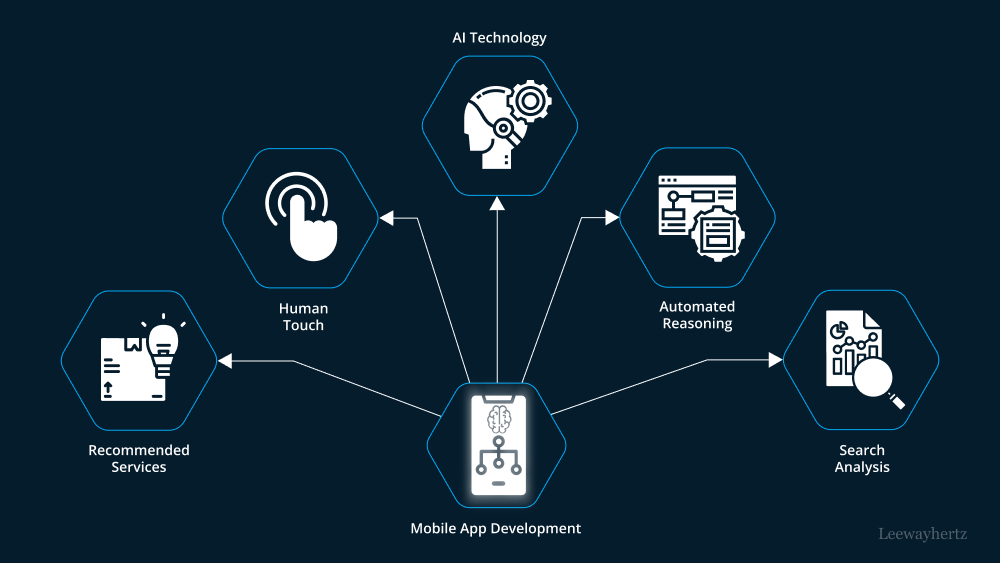
The amalgamation of AI and mobile app development is a phenomenon that sparks creativity and advancements. These AI-powered apps can offer personalized experiences, predictive insights, and unmatched automation. Imagine an app that adapts to your preferences, predicts your needs, and learns from your interactions. This is the future that AI mobile app development companies are bringing to life.
Why Choose an AI Mobile App Development Company?
Enhanced User Experiences: With AI, mobile apps become intuitive and user-centric. AI algorithms analyze user behavior to provide tailor-made suggestions and features, ensuring that every interaction is meaningful and engaging.
Data-Driven Insights: AI-powered apps gather and analyze data in real-time, offering invaluable insights into user preferences and market trends. This data-driven approach enables companies to make informed decisions and refine their strategies.
Automation and Efficiency: AI streamlines processes by automating routine tasks, thus reducing human intervention. This not only improves efficiency but also minimizes the margin for errors, leading to better outcomes.
Predictive Analytics: AI algorithms can predict user behavior and trends, enabling businesses to proactively address user needs. This predictive aspect enhances customer satisfaction and aids in staying ahead of the competition.
Scalability: AI-powered apps can seamlessly handle increased workloads without compromising performance. This scalability is essential for businesses experiencing rapid growth.
LeewayHertz: Pioneering AI-Powered Mobile App Development
When it comes to AI-powered mobile app development companies, LeewayHertz stands as a shining example of innovation and excellence. With a deep-rooted commitment to pushing the boundaries of technology, LeewayHertz has carved a niche for itself in crafting cutting-edge applications that redefine user experiences.
Innovative Projects: LeewayHertz’s portfolio showcases an array of groundbreaking projects that highlight the immense potential of AI in mobile apps. From predictive healthcare applications that monitor users’ well-being to AI-driven financial tools that offer insightful investment recommendations, the company’s creations embody the future of mobile app development.
Expertise and Experience: LeewayHertz boasts a team of seasoned professionals who specialize in AI technologies and mobile app development. Their wealth of knowledge and dedication to staying ahead of the curve ensures that clients receive solutions that are not only advanced but also highly effective.
Client-Centric Approach: One of the distinguishing factors of LeewayHertz is its client-centric approach. The company works closely with clients to understand their unique needs and objectives, tailoring AI solutions that align perfectly with their vision.
The Future: Where AI and Mobile Apps Converge
As we venture further into the digital landscape, the integration of AI and mobile app development will become increasingly intertwined. AI-powered mobile app development companies will continue to push the envelope, creating applications that redefine convenience, personalization, and efficiency.
From healthcare and finance to retail and entertainment, the possibilities of AI-powered mobile apps are boundless. Imagine a world where apps not only serve as tools but as intelligent companions that understand and adapt to your lifestyle.
Conclusion
The rise of AI-powered mobile app development companies has marked a transformative chapter in technological evolution. With companies like LeewayHertz leading the charge, we are witnessing the birth of applications that are not merely functional, but intuitive, predictive, and engaging. The synergy of AI and mobile app development promises a future where innovation knows no bounds, and the way we interact with technology reaches new heights. So, brace yourself for a revolution that’s set to reshape the world of mobile apps as we know it.






 Development Services