Generative AI in Customer Service: Transforming Interactions with Intelligence

In today’s competitive market, exceptional customer service can be the defining factor that distinguishes a brand from its competitors. While traditional methods and automation tools have been pivotal in addressing customer needs, Generative AI is emerging as a game-changing technology that redefines customer experiences. Leveraging advanced natural language processing (NLP) and machine learning models, Generative AI enables companies to provide personalized, efficient, and scalable customer support.

This blog delves into the transformative potential of Generative AI in customer service, highlighting its capabilities, applications, and benefits, along with key implementation considerations.

What is Generative AI in Customer Service?

Generative AI involves using AI systems capable of creating new, human-like text, audio, video, or other forms of content. In customer service, it can interpret customer queries, generate accurate and contextually appropriate responses, and even predict customer needs based on historical data.

Powered by advanced models such as OpenAI’s GPT or Google’s LaMDA, Generative AI ensures that customer interactions are not only efficient but also feel natural and personalized, significantly enhancing user satisfaction and loyalty.

Key Capabilities of Generative AI in Customer Service

  1. Personalized Responses
    Generative AI excels in understanding and adapting to individual customer contexts. By analyzing historical interactions, it can craft responses that resonate personally with each customer.
  2. Multichannel Support
    Customers interact through various channels—chat, email, social media, or phone. Generative AI enables seamless, unified responses across all these platforms, ensuring consistent brand communication.
  3. Language Versatility
    With its multilingual capabilities, Generative AI eliminates language barriers, offering real-time support in diverse languages, which is critical for businesses with global audiences.
  4. Proactive Assistance
    Predictive models within Generative AI anticipate customer needs, offering solutions before a query is even raised. For instance, it can remind users about upcoming subscriptions or suggest solutions for recurring issues.
  5. Real-Time Learning
    Generative AI models learn and improve over time, becoming more effective in handling queries and understanding customer preferences.

Applications of Generative AI in Customer Service

  1. Intelligent Chatbots and Virtual Assistants
    Generative AI-powered chatbots simulate human-like conversations, addressing queries, resolving issues, and even upselling services. These assistants are always available, ensuring uninterrupted support.
  2. Ticket Resolution and Automation
    By automating ticket categorization and offering instant responses to common inquiries, Generative AI reduces the burden on human agents and accelerates problem resolution.
  3. Customer Sentiment Analysis
    Generative AI can analyze customer sentiments during interactions, providing insights into customer satisfaction levels and helping agents adjust their approach accordingly.
  4. Dynamic FAQ Generation
    Instead of relying on static FAQ pages, Generative AI creates tailored responses to customer-specific questions, improving clarity and user engagement.
  5. Speech-to-Text and Text-to-Speech Capabilities
    For call centers, Generative AI can transcribe calls in real time and generate conversational responses, making interactions smoother and more efficient.

Benefits of Generative AI in Customer Service

  1. Enhanced Efficiency
    By automating repetitive tasks and handling a large volume of queries simultaneously, Generative AI enables faster response times and reduced wait periods.
  2. Cost Savings
    Companies can lower operational costs by reducing dependency on large customer service teams without compromising on service quality.
  3. Scalability
    Unlike human agents, Generative AI scales effortlessly, handling surges in customer queries during peak periods without degradation in performance.
  4. Improved Customer Satisfaction
    Personalized interactions and prompt resolutions lead to higher customer satisfaction, fostering brand loyalty and repeat business.
  5. Empowered Human Agents
    Generative AI doesn’t replace human agents but augments their capabilities. By handling routine queries, it allows human agents to focus on complex issues requiring emotional intelligence and nuanced judgment.

Challenges and Considerations

While the benefits are significant, implementing Generative AI in customer service comes with challenges that need addressing:

  1. Data Privacy and Security
    Handling sensitive customer data requires robust encryption and compliance with data protection regulations, such as GDPR or CCPA.
  2. Bias in AI Responses
    Generative models trained on biased datasets may produce inappropriate or inaccurate responses. Continuous monitoring and fine-tuning are essential.
  3. Integration with Existing Systems
    Integrating Generative AI with legacy systems and CRM platforms can be technically complex, requiring expertise and time.
  4. Human Oversight
    Generative AI may occasionally misinterpret customer queries or provide incorrect information. Ensuring a human-in-the-loop system is vital for quality control.

Best Practices for Implementation

  1. Start Small
    Begin with a pilot project focusing on specific use cases to test Generative AI’s effectiveness before scaling its implementation.
  2. Prioritize Training Data
    High-quality, diverse datasets ensure more accurate and unbiased responses, improving customer interactions.
  3. Regular Updates
    Continual retraining of models with updated data and user feedback is essential for maintaining relevance and accuracy.
  4. Hybrid Models
    Use a combination of Generative AI and human agents to strike the right balance between automation and human touch.

The Future of Generative AI in Customer Service

As technology advances, Generative AI will become increasingly sophisticated, enabling hyper-personalized customer interactions that are intuitive, context-aware, and emotionally intelligent. The integration of AI with emerging technologies like the metaverse, IoT, and AR/VR could further enhance customer service experiences, making them more immersive and interactive.

Businesses that adopt Generative AI now are not just enhancing their current operations but are also positioning themselves as pioneers in a future where exceptional customer service will be the norm.


Generative AI is more than a technological innovation—it’s a strategic asset that can redefine how businesses connect with their customers. By leveraging its capabilities wisely, companies can build stronger relationships, drive customer satisfaction, and achieve sustained growth.
Generative AI in Insurance: Transforming the Industry

The insurance industry, often seen as conservative and risk-averse, is undergoing a digital transformation powered by generative AI. With its ability to analyze vast datasets, provide tailored insights, and automate complex tasks, generative AI is reshaping how insurers assess risk, engage customers, and process claims. This blog explores the transformative applications of generative AI in the insurance sector, the benefits it delivers, and how it is driving efficiency and innovation.

Applications of Generative AI in Insurance

  1. Intelligent Risk Assessment Generative AI enhances underwriting by analyzing vast amounts of historical and real-time data to assess risks accurately. Models like GPT-4 and PaLM 2 assist underwriters in making data-driven decisions, reducing the margin for error and streamlining policy creation processes.
  2. Claims Processing and Fraud Detection Automation powered by generative AI accelerates claims management by identifying patterns, predicting outcomes, and verifying documentation. Tools such as LeewayHertz’s ZBrain leverage AI to detect anomalies indicative of fraudulent claims, reducing financial losses and increasing operational efficiency.
  3. Personalized Customer Engagement By analyzing customer behavior and preferences, generative AI creates hyper-personalized insurance recommendations and marketing campaigns. This improves customer satisfaction and retention, as policies are tailored to individual needs.
  4. Compliance and Legal Operations Navigating regulatory complexities is a significant challenge for insurers. Generative AI simplifies this by creating reports, summarizing legal requirements, and monitoring compliance with dynamic regulations, reducing operational risks and ensuring adherence to laws.
  5. Dynamic Pricing Models AI models generate adaptive pricing strategies by evaluating factors such as market trends, individual customer profiles, and historical data. This allows insurers to offer competitive yet profitable pricing options in real time.

Key Benefits of Generative AI for Insurers

  1. Enhanced Efficiency By automating repetitive tasks like data entry and report generation, generative AI allows insurers to focus on strategic activities, cutting operational costs and turnaround times.
  2. Improved Accuracy AI-driven insights minimize human errors in risk assessments, underwriting, and claims processing, leading to better decision-making and fewer disputes.
  3. Fraud Prevention Generative AI tools like ZBrain use predictive analytics to flag fraudulent activities early, safeguarding company resources and improving trustworthiness in the industry.
  4. Customer Satisfaction With AI’s ability to offer 24/7 support via conversational agents and create personalized experiences, customer service becomes more engaging and responsive.

Challenges and Solutions

While the benefits of generative AI are substantial, challenges remain, including concerns about data privacy, the interpretability of AI models, and the integration of AI systems with legacy infrastructure. Insurers can address these issues by adopting robust cybersecurity measures, investing in explainable AI solutions, and partnering with experienced technology providers like LeewayHertz.

The Future of Generative AI in Insurance

Generative AI is set to drive further innovation in the insurance landscape. Emerging applications include predictive maintenance for insured assets, AI-guided investment strategies, and augmented reality tools for damage assessments. The growing adoption of platforms like ZBrain will enable insurers to unlock new levels of efficiency, customer satisfaction, and profitability.


The integration of generative AI in insurance is not merely an enhancement—it is a paradigm shift. As technology advances, insurers embracing these tools will gain a competitive edge, ensuring their relevance in an increasingly digital-first world.

Generative AI in Healthcare: Unlocking New Frontiers

Generative AI, a subset of artificial intelligence, is reshaping various industries, and healthcare is no exception. By leveraging its ability to generate new data, insights, and solutions, generative AI is driving innovation across diagnostics, treatment, and patient care. In this blog, we will explore what generative AI is, its transformative impact on healthcare, and its key use cases within the industry.

What is Generative AI?

Generative AI refers to algorithms, typically powered by deep learning models, that can create new content or data similar to what they were trained on. Unlike traditional AI systems, which rely on predefined outputs and rules, generative AI models can produce novel and dynamic outputs, ranging from images and text to synthetic data.

Prominent generative AI technologies include Generative Adversarial Networks (GANs) and Transformer-based models like GPT (Generative Pre-trained Transformers). These systems can create realistic visuals, compose human-like text, and even design drug molecules, making them highly versatile.

The strength of generative AI lies in its ability to analyze and learn from large datasets, identify patterns, and generate outputs that can mimic human creativity and problem-solving abilities. In healthcare, these capabilities unlock new potential for advancing diagnostics, treatment, and patient engagement.

The Transformative Role of Generative AI in Healthcare

Generative AI has emerged as a game-changer in healthcare by addressing critical challenges, such as limited resources, complex diagnostics, and the demand for personalized care. Here’s how it is transforming the sector:

  1. Enhanced Diagnostics and Imaging
    Generative AI helps improve diagnostic accuracy by analyzing medical images and generating synthetic data for rare conditions. For example, GANs can produce high-quality medical images that aid in training radiologists and developing AI-based diagnostic tools.
  2. Accelerated Drug Discovery
    Traditionally, drug discovery is a time-intensive and expensive process. Generative AI reduces the time and cost by identifying potential drug candidates through simulations and molecule design. It predicts molecular structures with high efficacy, enabling faster clinical trials and approvals.
  3. Personalized Treatment Plans
    By synthesizing patient data, generative AI creates tailored treatment plans, considering genetic profiles, medical histories, and real-time health data. This leads to improved outcomes and a higher standard of patient care.
  4. Data Augmentation and Anonymization
    Healthcare organizations often face challenges in sharing patient data due to privacy concerns. Generative AI can generate synthetic datasets that mimic real patient data without compromising privacy, enabling advanced research while adhering to regulations.
  5. Healthcare Training and Education
    Generative AI creates realistic simulations for training healthcare professionals. From virtual anatomy lessons to simulated surgeries, it helps build expertise without risking patient safety.
  6. Patient Experience Transformation
    Chatbots and virtual assistants powered by generative AI improve patient interactions by providing instant answers, booking appointments, and delivering personalized health advice. They bridge the gap between healthcare providers and patients, offering timely support and guidance.

Generative AI Use Cases in Healthcare

The real-world applications of generative AI in healthcare are vast and expanding rapidly. Here are some of the most impactful use cases:

1. Early Disease Detection

Generative AI systems analyze historical data and identify patterns indicative of diseases like cancer, cardiovascular issues, or diabetes at an early stage. By generating predictive models, it enhances the accuracy of screenings and allows for proactive interventions.

2. Radiology and Imaging

Generative AI enhances medical imaging by reconstructing incomplete scans or improving image quality. This is particularly useful in low-resource settings where imaging equipment may not be optimal. AI-generated images also assist in training radiologists.

3. Drug Development

AI-driven drug discovery platforms like Insilico Medicine use generative models to design new drugs. These models simulate how potential drugs interact with biological systems, accelerating the discovery and reducing costs significantly.

4. Virtual Patient Models

Generative AI creates digital twins of patients, enabling researchers and clinicians to simulate treatment outcomes in a virtual environment. This improves treatment precision and minimizes risks.

5. Mental Health Support

Generative AI-powered chatbots offer conversational therapy and mental health support, providing accessible care for individuals who might otherwise struggle to find timely help. These systems are trained to recognize emotional cues and provide empathetic responses.

6. Customized Prosthetics and Implants

Generative AI designs prosthetics and implants tailored to a patient’s unique anatomy, ensuring better comfort, functionality, and long-term success. This application is transforming the field of orthopedics and rehabilitation.

7. Synthetic Clinical Trials

Generative AI creates synthetic data to simulate clinical trials, reducing the dependency on human participants and lowering ethical concerns. It expedites research and development while maintaining accuracy and reliability.

Endnote

Generative AI is redefining what is possible in healthcare. Its ability to analyze, generate, and synthesize complex data is driving innovation across diagnostics, drug development, patient care, and more. By addressing critical challenges, such as early detection, resource limitations, and the need for personalized care, generative AI is paving the way for a more efficient and effective healthcare system.

As we continue to explore and implement generative AI solutions, the possibilities for enhancing patient outcomes and improving healthcare delivery are boundless. However, it is crucial to address challenges such as data privacy, ethical considerations, and regulatory compliance to ensure the responsible and equitable use of this transformative technology.

Generative AI is not just a tool—it is a revolution that holds the promise of a healthier, more connected world. The healthcare industry must embrace this innovation to unlock its full potential and deliver on its mission of improving lives.

AI Agents in Customer Service: A New Era of Support

As technology advances, customer service is evolving rapidly, with AI agents at the forefront of this transformation. These intelligent systems utilize artificial intelligence to provide efficient, responsive, and personalized support. This blog explores how AI agents are reshaping customer service and the numerous benefits they offer.

Understanding AI Agents in Customer Service

AI agents are software applications designed to simulate human interaction. Leveraging NLP and machine learning, they can engage customers, understand inquiries, and provide accurate responses. By automating support, these agents help businesses enhance service delivery and operational efficiency.

Key Applications of AI Agents in Customer Service

  1. Instant Support AI agents deliver immediate assistance to customers, reducing response times and enhancing satisfaction.
  2. Data Analysis These agents analyze customer interactions, providing insights that help businesses refine their offerings and strategies.
  3. Omnichannel Presence AI agents operate across various platforms, ensuring consistent customer experiences regardless of the communication channel.
  4. Self-Service Options By enabling self-service functionalities, AI agents empower customers to find solutions independently, improving overall efficiency.
  5. Feedback Collection AI agents can gather customer feedback seamlessly, allowing businesses to make data-driven improvements.

Benefits of AI Agents in Customer Service

  1. Cost Savings Automating routine inquiries reduces the need for extensive staffing, leading to significant cost savings.
  2. Enhanced Customer Engagement With personalized interactions and prompt responses, AI agents foster deeper customer relationships.
  3. Operational Efficiency By handling repetitive tasks, AI agents allow human agents to focus on more complex issues, improving overall productivity.
  4. Scalability AI agents can easily scale to accommodate increasing customer demands without compromising service quality.

Challenges in Implementing AI Agents in Customer Service

Organizations must address several challenges to successfully implement AI agents:

  1. Integration Issues Ensuring that AI agents work seamlessly with existing systems is crucial for their effectiveness.
  2. Data Security Protecting customer data is paramount. Businesses must prioritize cybersecurity measures.
  3. Balancing Automation and Human Interaction Maintaining a balance between AI automation and human touch is essential for building customer trust.

The Future of AI Agents in Customer Service

The future of AI agents in customer service holds great promise. Organizations can expect:

  1. Advanced Capabilities As AI technology evolves, agents will become more adept at handling complex inquiries.
  2. Predictive Personalization Future AI agents will leverage predictive analytics to tailor interactions based on individual customer preferences.
  3. Collaborative Models A hybrid approach, where AI and human agents work together, will emerge, combining efficiency with emotional intelligence.

Conclusion

AI agents for customer service are revolutionizing the way businesses interact with customers. By leveraging these advanced technologies, organizations can enhance operational efficiency, improve customer satisfaction, and position themselves for future success. Embracing AI in customer service is not just an option; it’s a necessity for staying competitive in today’s dynamic marketplace.

Exploring Generative AI: Key Use Cases and Industry Applications

Generative AI is a branch of artificial intelligence that uses machine learning techniques, such as unsupervised learning algorithms, to create content like videos, images, audio, text, or code. In unsupervised learning, models are trained on datasets without labeled outputs, allowing them to identify patterns and structures without human intervention. The goal is to use these models to analyze data and generate new, original content.

Generative AI tools utilize advanced algorithms to extract unique insights, enhancing decision-making processes and operational efficiency. Businesses can leverage generative AI to stay competitive in dynamic markets by offering customized products and services.

By identifying patterns from input data, computers powered by generative AI can produce entirely new content.

How Generative AI Works: A Comprehensive Overview

Generative AI operates by creating content—text, images, music, and more—across various domains by learning from vast datasets. The process involves three main phases: training, tuning, and generation:

  1. Training: Building the Foundation
    • Data Collection: Developers gather massive amounts of unstructured, unlabeled data, like text or multimedia content.
    • Learning Process: The model learns through tasks like predicting words or identifying image patterns, adjusting internal parameters to minimize errors.
    • Computational Demand: Training requires significant computational power, often using thousands of GPUs for extended periods. Open-source foundation models can help save time and resources.
  2. Tuning: Customizing for Specific Tasks
    • Fine-Tuning: The model is tailored to specific tasks using labeled data. For example, a customer service chatbot would be trained on queries and responses for better accuracy.
    • Reinforcement Learning with Human Feedback (RLHF): Humans provide feedback to refine the model’s outputs, improving the relevance and accuracy of results.
  3. Generation, Evaluation, and Continuous Improvement
    • Content Generation: The model generates content based on input prompts, which is then evaluated for quality.
    • Evaluation and Retuning: Regular assessments ensure the model maintains performance, with feedback driving further improvements.
    • Retrieval-Augmented Generation (RAG): RAG enhances accuracy by incorporating external data sources.

Generative AI Capabilities and Use Cases

Generative AI has broad capabilities, including video and audio generation, synthetic data creation, text generation, and code generation. These functions are driving innovation across industries. Below are key Generative AI use cases across various sectors.

Generative AI Use Cases in Visual Content

  1. Image Generation and Enhancement: Generative AI tools, often text-to-image models, allow users to input descriptions and generate realistic images based on various parameters like style or location. These tools also offer image enhancement features, such as:
    • Image Completion: Filling in missing parts of an image.
    • Semantic Image-to-Photo Translation: Converting sketches into photorealistic images.
    • Image Super-Resolution: Enhancing low-resolution images without losing detail.
  2. Video Creation: AI tools automate video production tasks like composition, special effects, and resolution enhancement. Key features include:
    • Video Prediction: Predicting future frames based on spatial and temporal analysis.
    • Video Style Transfer: Applying the style of one video to another.
  3. 3D Shape Generation: AI can create 3D models using techniques like VAEs, GANs, and autoregressive models, aiding tasks such as 3D printing and virtual reality.

Generative AI Use Cases Across Industries

Entertainment:

  • Music Generation: AI tools can create or remix music by analyzing patterns.
  • Video Editing and Special Effects: AI assists in advanced editing and producing animations or movies.
  • Gaming: AI develops new characters, levels, and storylines, enriching player experiences.
  • Virtual Reality Development: AI generates immersive environments and realistic voices for avatars.

Finance & Banking:

  • Fraud Detection: AI identifies fraudulent activity by analyzing transaction data.
  • Personalized Banking Experiences: AI provides tailored financial advice and services.
  • Risk Management: AI predicts risks by analyzing historical trends and data.

Healthcare:

  • Medical Diagnostics: AI improves accuracy in diagnosing conditions through imaging analysis.
  • Personalized Medicine: AI helps develop customized treatment plans based on patient data.
  • Drug Discovery: AI accelerates drug research and repurposing.

Endnote

Generative AI is reshaping industries globally, from creative fields like art and music to precision-focused sectors like healthcare and finance. It drives innovation, enhancing creativity, productivity, and operational efficiency. As generative AI advances, it’s crucial to consider ethical challenges while exploring new possibilities.

Generative AI has only begun its transformative journey. Its influence will continue to shape our world, unlocking the potential for even greater human-AI collaboration.

Ready to automate your business operations with generative AI? Connect with LeewayHertz’s generative AI developers today!

AI in media and entertainment: Use cases, benefits and solution

The Role of AI in Transforming Media and Entertainment

The media and entertainment industry has undergone a profound transformation in the last decade, with AI playing a central role. From content creation and editing to marketing, AI is reshaping how we experience films, music, and games. In this blog, we’ll explore how AI is influencing various aspects of the entertainment industry and its future potential.

1. AI in Content Creation and Editing

AI has revolutionized the way content is created, offering tools that streamline production and editing processes. Algorithms are now being used to generate everything from music compositions to video game storylines. AI tools like generative adversarial networks (GANs) and natural language processing (NLP) enable producers to create content at a faster rate, reducing human intervention and enhancing efficiency.

For instance, AI-powered tools are used for:

  • Scriptwriting: Machine learning models analyze vast amounts of existing content, enabling AI to assist in scriptwriting and generating plot ideas based on predefined themes.
  • Video Editing: AI simplifies tasks such as color correction, scene selection, and special effects, speeding up post-production workflows.

2. Personalization and Audience Engagement

One of the most significant benefits AI brings to the media industry is the ability to offer highly personalized content. Streaming platforms such as Netflix and Spotify rely heavily on AI to suggest movies, TV shows, and songs tailored to users’ tastes. By analyzing user behavior, AI predicts preferences and delivers recommendations, increasing engagement.

  • Recommendation Algorithms: AI uses collaborative filtering and deep learning to analyze patterns in viewing habits and music choices. This helps platforms deliver personalized recommendations that improve user experience and retention.
  • Targeted Advertising: AI also enhances targeted advertising by segmenting audiences based on their online behavior, delivering more relevant ads, and increasing conversion rates.

3. AI in Animation and VFX

Visual effects (VFX) and animation are areas where AI has made significant strides. AI algorithms are now used to generate realistic animations and even automate certain aspects of visual effects in films and TV shows. Machine learning models trained on thousands of images can create hyper-realistic scenes and characters without the need for manual intervention.

  • Motion Capture: AI improves motion capture technology, making it more efficient and cost-effective. By learning from existing human movements, AI can predict how characters should move in different scenarios, minimizing the need for expensive suits and sensors.
  • Facial Recognition: AI in facial recognition helps in animating characters’ expressions more accurately. This enhances the storytelling process by creating more emotionally engaging characters in both movies and video games.

4. AI in Gaming

The gaming industry has been one of the earliest adopters of AI, using it to enhance gameplay, design, and user experiences. AI-driven NPCs (non-player characters) can now learn and adapt in real-time, making gameplay more dynamic and immersive. Moreover, AI helps game developers by automating certain aspects of design, such as level creation or character behaviors.

  • Procedural Content Generation: AI algorithms are used to create vast game worlds, including terrain, maps, and missions, providing players with endless possibilities.
  • Enhanced AI Opponents: Games like The Last of Us Part II and Halo use AI to create smarter, more responsive enemies that adapt to the player’s tactics, making gameplay more challenging and engaging.

5. AI in Music Production

In music production, AI is revolutionizing how artists create and distribute their work. AI-powered tools are used to assist with composing, mixing, and mastering tracks. Platforms like Amper Music and AIVA (Artificial Intelligence Virtual Artist) allow creators to generate original compositions in various styles.

  • Music Composition: AI algorithms are capable of composing music based on input parameters like genre, tempo, and mood. This is especially beneficial for content creators looking for background scores.
  • Music Recommendation: Similar to video streaming platforms, music services like Spotify and Apple Music utilize AI to offer personalized playlists and radio stations that align with users’ listening habits.

6. AI in Marketing and Distribution

AI plays a crucial role in the marketing and distribution of media content. By analyzing vast amounts of user data, AI enables marketers to craft more precise campaigns and measure their success in real-time. From predicting box office hits to optimizing social media strategies, AI helps in reaching audiences more effectively.

  • Predictive Analytics: AI can predict how well a piece of content will perform by analyzing past trends and audience reactions. This helps studios make informed decisions about marketing strategies and release schedules.
  • Social Media Management: AI tools assist in managing social media campaigns by identifying optimal posting times, analyzing engagement, and even generating content suggestions based on trending topics.

7. Challenges and Ethical Considerations

While AI offers numerous benefits, there are challenges and ethical issues to consider. One concern is job displacement, as AI tools can automate tasks traditionally done by humans. Additionally, there are concerns about the misuse of AI in creating deepfakes, which could blur the line between reality and fiction, posing risks for misinformation.

Ethically, the industry must address questions about creativity and authorship. If an AI writes a script or composes a song, who owns the rights? These are questions that the industry will need to tackle as AI becomes more ingrained in content creation.

Conclusion

AI’s impact on the media and entertainment industry is profound, offering new opportunities for content creators, marketers, and distributors alike. As AI continues to evolve, it will enable more personalized, efficient, and creative processes, transforming the way we consume and engage with entertainment. However, it’s essential for industry leaders to remain mindful of the ethical implications and strive for a balanced approach that benefits both creators and consumers.

Source Link: https://www.leewayhertz.com/ai-in-media-and-entertainment/

Revolutionizing Business Operations: AI Use Cases Across Key Industries

Role of AI in Business Operations

Artificial Intelligence (AI) is transforming business operations by enhancing efficiency, streamlining processes, and improving decision-making. From automating routine tasks to enabling predictive analytics, AI technologies such as machine learning (ML), natural language processing (NLP), and computer vision are enabling businesses to drive innovation and create competitive advantages.

AI Use Cases in Major Industries

Healthcare

AI in healthcare enhances patient care with diagnostics, personalized medicine, and robotic surgery. AI-driven analytics also accelerate drug discovery and clinical trial processes. Machine learning models can predict disease outbreaks and monitor patient health through wearables and telemedicine platforms.

Retail and E-commerce

AI reshapes retail by enabling personalized shopping experiences, improving customer service with chatbots, and optimizing inventory management. Predictive analytics helps retailers anticipate demand, while recommendation engines boost sales through targeted product suggestions.

Banking and Financial Services

AI enhances fraud detection, risk assessment, and customer support in financial services. Automated systems can process loan applications, while ML models analyze customer behavior for personalized banking experiences. AI also streamlines compliance monitoring and anti-money laundering (AML) processes.

Supply Chain and Logistics

AI optimizes supply chain operations by predicting demand, managing inventory, and improving route planning. Predictive maintenance powered by AI helps companies avoid costly downtime, while real-time data analytics enhance visibility across the entire supply chain.

Travel

In the travel industry, AI enhances customer experiences through chatbots, personalized recommendations, and efficient booking systems. Predictive algorithms optimize flight routes, reduce fuel consumption, and improve operational efficiency for airlines and other travel service providers.

How to Implement AI in Business Operations

  1. Identify Pain Points: Pinpoint areas where AI can solve inefficiencies, such as manual tasks, customer service, or data analysis.
  2. Choose the Right AI Tools: Select AI technologies that align with your operational goals, whether it’s NLP for customer service or ML for predictive analytics.
  3. Data Strategy: Ensure you have access to quality data as AI models rely on accurate and well-structured datasets for successful implementation.
  4. Scalability: Plan for scalability so that the AI solution can grow with your business and handle increasing data volumes.
  5. Team Training: Train your staff to work with AI systems and understand how to make data-driven decisions.

How LeewayHertz’s Enterprise AI Solutions Transform Business Operations

LeewayHertz offers custom AI solutions tailored to various industries, helping businesses automate processes, enhance decision-making, and improve operational efficiency. Their AI frameworks integrate with existing systems, providing predictive analytics, NLP, and other advanced AI capabilities to solve industry-specific challenges. Whether it’s enhancing customer service in retail or optimizing logistics in supply chains, LeewayHertz empowers companies to harness AI for sustained growth and innovation.

Endnote

As AI advances rapidly, it is emerging as the primary catalyst for technological transformation across industries. Sectors like finance, automotive, and telecommunications are already experiencing significant gains in efficiency and decision-making. The broad applications of AI offer limitless potential, marking only the beginning of its transformative impact. Whether it’s optimizing internal operations or enhancing customer engagement, AI holds the key to reshaping industries. Partner with our AI experts at LeewayHertz to unlock its full potential and drive innovation in your business.

Source Link: https://www.leewayhertz.com/ai-use-cases-and-applications/

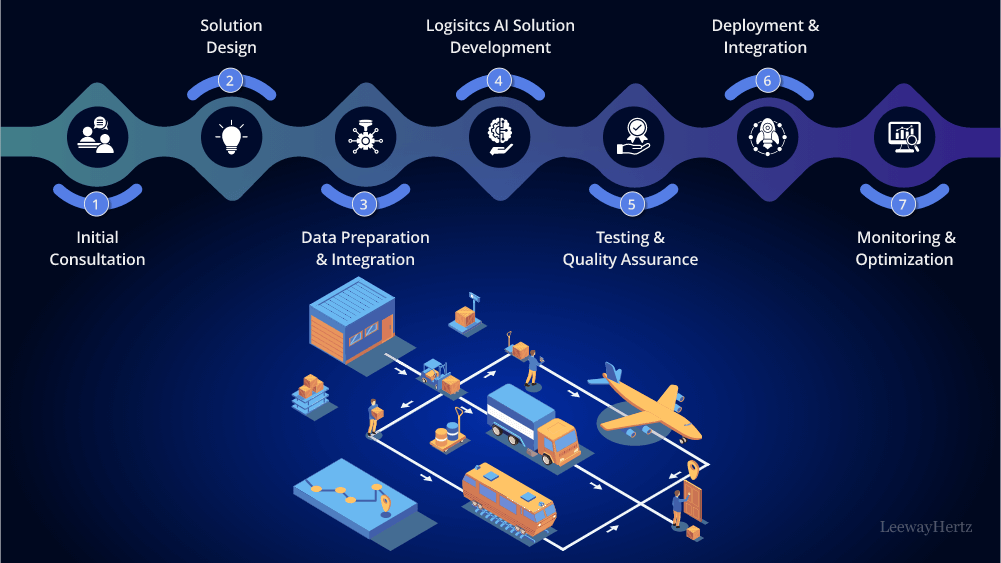
The Transformative Role of Logistics AI Consulting and Development

The logistics industry is undergoing a significant transformation, driven by the integration of artificial intelligence (AI) and machine learning (ML). AI consulting and development companies, like LeewayHertz, are at the forefront of this revolution, offering innovative solutions that optimize supply chain operations, enhance efficiency, and reduce costs.

Key Services in AI-Powered Logistics

  1. Strategic Consulting AI consulting firms provide strategic advice to transform logistics operations. They leverage deep industry expertise and advanced technologies, including AI, blockchain, and IoT, to develop tailored solutions. These solutions aim to optimize supply chains, reduce costs, and enhance service delivery, ensuring that logistics operations are efficient, robust, and future-ready​.
  2. PoC and MVP Development Proof of Concept (PoC) and Minimum Viable Product (MVP) development services are critical in the initial phases of product development. AI consulting companies help clients align their software initiatives with market demands, test the feasibility of their ideas, and integrate essential features based on real-world feedback. This approach ensures that logistics solutions are both innovative and practical, ready to meet market demands​.
  3. Custom Logistics Software Development End-to-end software development services are crucial for creating custom logistics solutions. These services cover everything from conceptualization and MVP creation to the development of comprehensive logistics software. Solutions include warehouse management systems, logistics ERP, and inventory management software, all designed to optimize processes with enhanced functionality and usability​.
  4. AI-Powered Solutions AI consulting firms specialize in developing and implementing customized AI-powered solutions tailored to specific business needs. These solutions optimize logistics operations for maximum efficiency and effectiveness. AI technologies enable real-time tracking, route optimization, order processing, and predictive analytics, redefining the standards of efficiency in logistics and supply chain operations​.
  5. Software Modernization Modernizing legacy logistics software is essential for enhancing functionality, usability, and efficiency. AI consulting firms assist with migrating legacy systems to the cloud and integrating advanced technologies like AI and ML. This modernization ensures that logistics software infrastructure is future-proof, addressing evolving business needs through infrastructure upgrades, code refactoring, and data optimization​.
  6. UI/UX Design User-centric design is crucial in developing intuitive interfaces for logistics software. Thorough usability testing and iterative improvements lead to highly functional and user-friendly designs. These designs significantly enhance the overall user experience within logistics operations, ensuring seamless interaction and optimized efficiency​.
  7. Quality Assurance and Testing Rigorous quality assurance and testing methodologies guarantee the flawless performance of logistics software. Comprehensive assessments, including functional and performance testing, identify and resolve issues before deployment, ensuring optimal software performance and reliability​.

Benefits of AI Integration in Logistics

  1. Enhanced Decision-Making AI systems analyze vast datasets to extract valuable insights that inform strategic decisions. This capability enables logistics companies to make data-driven decisions, optimizing operations and improving overall efficiency​.
  2. Operational Efficiency Automation of repetitive tasks through AI streamlines processes, reduces human error, and frees up valuable time for staff to focus on high-value activities. This automation leads to significant improvements in operational efficiency and productivity​ .
  3. Cost Reduction AI technologies help in identifying inefficiencies and optimizing resource utilization, leading to substantial cost savings. For instance, AI-driven route optimization can reduce fuel consumption and improve delivery times, contributing to lower operational costs​.
  4. Predictive Analytics Predictive analytics powered by AI can forecast demand, optimize inventory levels, and predict potential disruptions in the supply chain. This foresight allows logistics companies to proactively address issues, minimizing delays and ensuring smooth operations​.
  5. Improved Customer Experience AI enables personalized customer experiences by providing real-time updates and responsive support. Enhanced customer service capabilities lead t.

Conclusion

AI consulting and development companies like LeewayHertz are revolutionizing the logistics industry by providing innovative, tailored solutions that enhance efficiency, reduce costs, and improve decision-making. By leveraging advanced technologies, these companies help logistics businesses stay competitive in a rapidly evolving market. Integrating AI into logistics operations not only drives operational excellence but also paves the way for future growth and innovation.

AI Chatbot Development Services

In this rapidly evolving digital era, businesses are continuously seeking innovative ways to enhance customer experience and streamline their operations. One of the game-changing technologies that have emerged in recent years is AI chatbot development. Leveraging artificial intelligence and natural language processing, AI chatbots have revolutionized the way companies interact with their customers, leading to increased efficiency, improved customer satisfaction, and greater overall success. In this blog, we explore the role of an AI chatbot development company in transforming businesses and unleashing the true potential of AI chatbot development services.

Understanding AI Chatbot Development

AI chatbot development is a process that involves creating intelligent virtual agents capable of simulating human-like conversations with users. These chatbots are powered by advanced AI algorithms, enabling them to understand user intent, analyze language patterns, and deliver contextually relevant responses. The technology behind AI chatbots allows them to learn from interactions and continuously improve their performance over time, providing a seamless and personalized experience to users.

The Need for AI Chatbot Development Services

With the growing demand for instant support and round-the-clock availability, businesses are turning to AI chatbots to meet these expectations. AI chatbot development services enable companies to enhance customer engagement, automate repetitive tasks, and provide real-time assistance, all while reducing operational costs. These chatbots can be deployed across various platforms, including websites, mobile applications, and social media, to reach a wider audience and establish a stronger brand presence.

Benefits of Partnering with an AI Chatbot Development Company

  1. Expertise in AI Technology: An AI chatbot development company possesses a team of skilled developers, data scientists, and AI experts who are well-versed in the latest advancements in AI technology. Their in-depth knowledge ensures the creation of robust and intelligent chatbots that cater to specific business needs.
  2. Customized Solutions: Every business is unique, and their chatbot requirements may vary. AI chatbot development companies offer tailored solutions that align with the organization’s goals and industry niche. From simple FAQ chatbots to sophisticated virtual assistants, these companies can create a wide range of chatbot applications.
  3. Seamless Integration: Integrating AI chatbots into existing systems can be challenging. A professional AI chatbot development company possesses the technical know-how to seamlessly integrate chatbots into various platforms, ensuring a smooth user experience and effective implementation.
  4. Natural Language Processing (NLP) Capabilities: Advanced NLP is the cornerstone of efficient AI chatbots. Leveraging NLP, these bots can understand user queries, context, and intent accurately, leading to more meaningful interactions and better customer satisfaction.
  5. Continuous Improvement: An AI chatbot development company doesn’t stop at deployment. They continuously monitor chatbot performance, gather user feedback, and refine algorithms to optimize the bot’s responses. This commitment to improvement guarantees a chatbot that evolves with the business and user needs.

The Transformative Power of AI Chatbot Development

  1. Enhanced Customer Experience: AI chatbots provide instant and accurate responses to customer queries, offering a seamless customer experience without any wait times. This leads to higher customer satisfaction and loyalty, as users feel valued and well-supported.
  2. Increased Efficiency: By automating repetitive tasks, AI chatbots free up human resources to focus on more complex and strategic activities. This efficiency translates to reduced operational costs and improved productivity for businesses.
  3. 24/7 Availability: AI chatbots operate round the clock, catering to customer needs regardless of time zones or holidays. This constant availability ensures that businesses never miss an opportunity to engage with their audience.
  4. Data Insights: AI chatbots gather valuable data from user interactions, providing businesses with insights into customer preferences, pain points, and behavior. These data-driven insights empower organizations to make informed decisions and refine their marketing strategies.

Conclusion

In conclusion, AI chatbot development services have emerged as a game-changing solution for businesses worldwide. The expertise, customized solutions, seamless integration, and continuous improvement offered by AI chatbot development companies are crucial in harnessing the true potential of AI chatbot technology. By partnering with such companies, businesses can enhance customer experience, increase efficiency, and gain a competitive edge in today’s fast-paced digital landscape. Embracing AI chatbots is not just an option; it’s a strategic imperative for companies looking to thrive in the age of automation and smart interactions.

Unleashing the Power of Tomorrow: A Deep Dive into Generative AI Consulting

In the ever-evolving landscape of technology, Generative AI Consulting has emerged as a transformative force, reshaping industries and revolutionizing the way businesses operate. This cutting-edge field harnesses the power of Generative Artificial Intelligence (AI) to provide innovative solutions, drive efficiency, and unlock unprecedented possibilities. As businesses strive to stay ahead in the digital era, partnering with a Generative AI consulting company becomes not just an option but a strategic imperative.

Understanding Generative AI Consulting

Generative AI Consulting involves the use of advanced machine learning models to create data, content, or even entire systems autonomously. Unlike traditional AI, which relies on predefined rules and structured data, generative AI has the ability to generate new, unique content by learning patterns and styles from existing data. This opens up a realm of possibilities across various industries, from automating content creation to designing complex algorithms.

Key Components of Generative AI Consulting

  1. Data Analysis and Modeling: Generative AI consultants start by analyzing vast datasets to understand patterns, trends, and nuances. This phase is crucial as it forms the foundation for training the AI models. Leveraging this data, the consultants build models that can generate content or perform specific tasks autonomously.
  2. Custom Model Development: Every business is unique, and generic solutions often fall short. Generative AI consulting companies excel in developing custom models tailored to the specific needs of their clients. Whether it’s generating creative content, optimizing processes, or enhancing user experiences, these models are designed to align seamlessly with the business objectives.
  3. Implementation and Integration: The real value of Generative AI lies in its practical application. Consultants work closely with businesses to integrate generative AI solutions into their existing systems. This ensures a smooth transition and allows organizations to leverage the power of AI without disrupting their operations.
  4. Continuous Improvement: Generative AI models are dynamic and can evolve over time. A reliable consulting partner will not only deploy the solution but also ensure continuous monitoring and improvement. This iterative process ensures that the AI models stay relevant and effective in the face of changing business dynamics.

Benefits of Generative AI Consulting

  1. Enhanced Efficiency: Generative AI automates repetitive tasks, allowing human resources to focus on more strategic and creative endeavors. This boosts overall efficiency, reduces errors, and accelerates decision-making processes.
  2. Innovative Content Creation: One of the most significant advantages of generative AI is its ability to create high-quality, contextually relevant content. This is especially valuable in industries like marketing, where engaging and personalized content can make a substantial impact.
  3. Cost Savings: By automating tasks that would otherwise require extensive human labor, generative AI can significantly reduce operational costs. This cost-effectiveness is a key driver for businesses looking to maximize their ROI while staying competitive.
  4. Personalized User Experiences: Generative AI can analyze user behavior and preferences to deliver personalized experiences. This is particularly beneficial in sectors like e-commerce and digital marketing, where tailoring content to individual preferences can enhance customer satisfaction and loyalty.

Conclusion

Generative AI Consulting is not just a technological advancement; it is a strategic move that can redefine the way businesses operate and innovate. As industries continue to evolve in the digital age, embracing generative AI becomes a necessity for those who seek to stay at the forefront of innovation. The partnership with a reliable Generative AI consulting company is not just an investment in technology but a commitment to a future where possibilities are limitless and innovation knows no bounds.